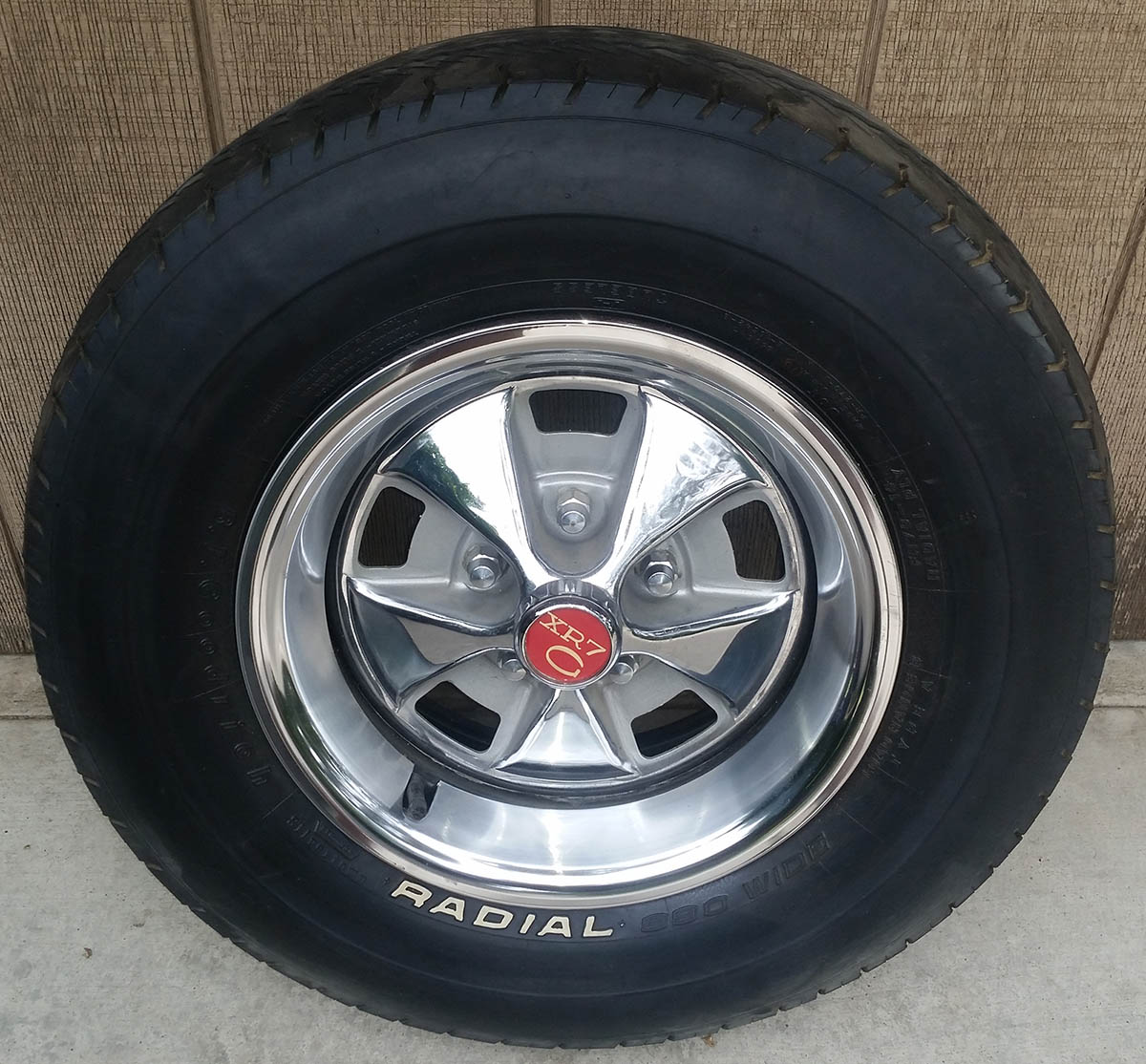
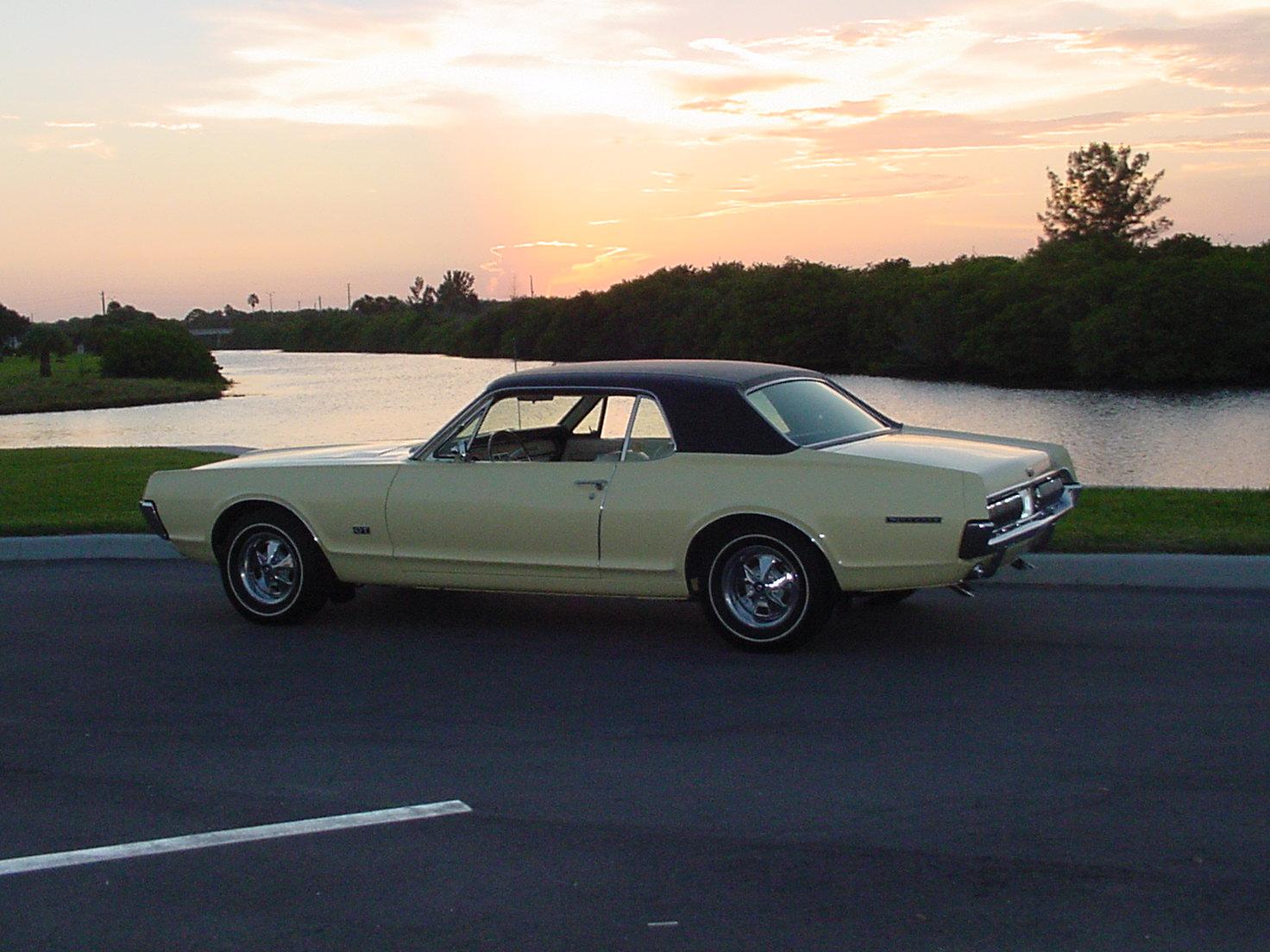
I believe the BF Goodrich Silvertown radial was the only radial tire available in 67. If so, “FR70X14 Wide Oval Radial White Sidewall Tires” on the Marti report could only mean they were BFGoodrich FR70X14 radial 3/8” whitewalls for the early Cougars.
Firestone Wide Ovals were bias ply because Firestone was late to the game of producing radials. They scrambled to roll out the ill-fated 500 radials around 1972 when the auto OEM’s made the switch. Problem is, they were made on equipment designed for bias tires. That didn’t end well for anyone.
From what I have learned since I began researching this topic, you could be right about Gooderich - they seem to be one of the first to produce radials for American cars, and were definitely in the game by '67/'68.
The Silvertown Radial 990! Some ad guy was spot-on in making the claim “launches the radial age”. But the giant lady messing with cars was actually kinda terrifying.
The 1968 Cougar GT-E predated the XR7-G by about four months and offered radial tires several months earlier as standard equipment. Michelin radial tires were optional in 1967 on all Ford Motor company products but not standard.
I wouldn’t put anything coker makes on my car. when I worked at the tire shop a few years ago we would order 6 tire in hopes that 4 were good enough to be sort of round and balance with less than 5 oz of weight. their quality control is a negative number . . .
After now working over 28 years as a product development engineer for Michelin, I think I can add a little history about tire design. Obviously I need to be careful in what I can discuss but should be able to address some of the things mentioned here.
I was born in 1959 and when my dad purchased new a Mercury Colony Park station wagon in ‘72, all he talked about was it came with MICHELIN steel belted radials. So apparently that was a big deal back then. Not common.
We just celebrated the 50th anniversary of the Michelin Research Center here in Greenville and some of the younger engineers put together a display of historical milestones within the company. The first Michelin steel belted radial tires used as factory OEM fitment in North America came on the Lincoln Mark III two door coupe in 1970.
But MICHELIN invented the steel belted radial tire around 1948/49 and sold throughout Europe. There were other “belted radial” tires before that time, but MICHELIN designed the first steel belted radial. The trick was developing the chemical adhesion/cohesion of rubber to the steel cables used in the summit belts. Rubber will NOT stick to bare steel and one of the chemists in France developed that technology.
When I started at the Research Center in ‘97, I began working with several veteran tire engineers who came down to Greenville in the early’90’s when Michelin purchased BF Goodrich/Uniroyal. I helped develop several BF Goodrich tires but mostly light truck and SUV tires, some of the Z-speed rated low profile tires used on Vette’s, Vipers, etc, but I don’t recall doing any type of design on the Radial T/A tires. I have seen some of the really early Radial T/A’s and they had some wild tread patterns compared to the even the first set I bought in the late 70’s for my ‘68 XR7 390GT car. They look great on the factory S/S wheels.
I would love to see a photo of the BF Goodrich tire that came on the GT-E. Like a set of really detailed photos showing the tread pattern, sidewall markings and of course the white rubber whether a whitewall or solid raised white letters
Thanks for the interesting history! I’ve always understood that Michelin was the pioneer in steel belted radial design, and you have confirmed it! Were the first Michelin steel belted radials known as the Michelin Radial X? And was that the same tire that Ford offered in the late 60’s?
I think the tire’s actual product line name marked on the sidewall was just “MICHELIN X”.
Basically all Michelin steel belted radials have an “X” in their product line name. It’s because the X represents the pattern of the steel cables in the two summit steel belt plies laid on top of the radial carcasse.
For ex., the first steel belt is laid 30 degrees from the radial polyester carcasse plies and the second steel belt is laid at minus 30 degrees. Those cables form an X pattern.
The first person I knew to put radial tires on his car was my brother-in-law, who put a set of Michelins on his '65 Ford Custom after having owned the car for a couple of years. I was fascinated by the construction - and the fact that they always looked to be low on air. IMHO Michelin were the best in those days - and are still one of the best. I also remember tire dealers telling buyers that if they used radial tires they would not need to switch to “snow” tires in winter (because the tread flexed and allowed snow to escape rather than get packed into the tread). However, in recent years we have learned that a winter radial is much better than a summer radial in winter…
Not sure if I am misunderstanding the comments on this topic but from what I have seen, Coker does claim to make it’s own tires. A Google search (Does Coker make their own tires?) reveals several references to that online (below), together with references to them having acquired many original molds to make the older style tires for antique cars, as well as having designed and constructed many new molds for the purpose. That said, I have many cars in my collection with Cokers on them and from my experience, they are more about the correct look than great performance (I have had several balancing issues with them over the years).
, including its own brand like the Coker Classic, and also manufactures tires using molds and technology from other brands it has acquired or has licensing agreements for. They produce a variety of tires for classic cars, trucks, and motorcycles, using modern materials and manufacturing processes to ensure safety and reliability.
Coker Classic: Coker produces its own brand, the Coker Classic, which was the first wide whitewall radial tire and provides a classic look with modern performance.
Licensed brands: Through licensing agreements, Coker manufactures tires for historic brands like B.F. Goodrich, Firestone, and U.S. Royal, ensuring they are period-correct but built with modern materials and safety standards.
Discontinued molds: The company reintroduces discontinued tire styles by acquiring and refurbishing original molds, which allows them to create authentic-looking tires for vintage vehicles.
Manufacturing process: Tires with custom sidewalls, such as redlines or wide whitewalls, are manufactured with the sidewall treatment as part of the production process, rather than being applied later.
Manufacturing location: Coker Tire manufactures its tires at its factory in Chattanooga, Tennessee.