It seems that more and more Cougars are being pulled from old barns sheds and garages. Under the thick layer of dust might just be something special. Of course the first thing to do is to find out what you have by decoding the door data tag, but what comes next?
What is the best practice for putting life back into a sleeping Cougar?
I always recommend a new tank and fuel line. What does your experience teach us?
Be sure to replace ALL rubber brake hoses, and the rear wheel cylinders.
We have restored several Cougars where the rear brake hose looks to be in good condition from the outside, but in fact has swelled internal and completely blocks all brake fluid flow to both rear brakes!
Do Not! Test the brakes, do not even touch the brake pedal. The rear wheel cylinders are for sure bad after a few years and all you will accomplish is seizing things up and getting rear brake drums off the seized pads can be a chore. Most likely if you have power brakes, brake fluid has already seeped into the brake booster but still, why push more fluid in there? Replace the wheel cylinders and master before you even put an ounce of pressure on the brake pedal.
I don’t have any experience with finding a good barn find but if i did. Recommendation: I would start with Photos as is. Collect as much of the dust as I could as a reminder of how I found it. Remove all spark plugs put penetrating oil in each cylinder before attempting to turn it over (and then pray). rebuild or replace carburetor. replace points,coil & voltage regulator. Check wiring for age or corrosion replace as necessary. New battery, new windshield wipers. Inspect and replace all brake system as needed. Replace tires. I would clean and (buff if possible).I’m sure there is more!!
I had a barn find a couple of years ago that had been sitting for nearly 15 years. It happened to be in my parents’ barn and it was my car. It got parked there in about 2003 when the clutch decided the Quick Time Pros had won. We pulled it out, and as others have said, fuel system and brakes were some of the first things to get worked on. One thing I would suggest is putting a borescope (camera) down each cylinder to see what shape the cylinders are in. Mine had the carburetor pulled off at some point and mice made it through the tape that was covering the intake. They managed to leave “remnants” in the intake and in some of the cylinders. A couple of the cylinders were actually rusted a bit. I’m pretty sure there would have been issues if I had just hit the starter rather than pull the engine out and clean it up. A lot of engines will be OK, but it’s still a good idea just to make sure. I was fortunate that in spite of all of the mouse traffic in the car they never decided to eat any wiring.
Even if the cylinders look ok, it’s probably a good idea to squirt a little oil in them and let them soak for a bit. It’s probably not a bad idea to throw some new spark plugs at it, too (at least if they look well used). Changing oils/filters/coolant out is a good thing to do, too.
I think it depends a lot of type of “barn” I pulled my car from a garage in southern Arizona after being parked for 20yrs. I feel like it was in much better shape then some, maybe that was because the previous owner has some some work before being parked? Maybe because it was in a garage or the dry climate? However the motor had not been started in that long or even seen the road since.
To get it running was pretty simple. New fuel tank, new fuel
Pump, cleaned all lines and reseal carb. Changed the oil and new plugs. Turned the motor over by hand to make sure it was free and hit the starter, fired right up.
In my case the brakes where pretty solid, previous owner had replaced them before parked but that was 20yrs prior. I do still plan on replacing the rubber lines but they do currently work fine, Wheel cylinders are fine too. Replacement is out of precaution and lack of trust.
I do agree with with everyone else, replace or clean the entire fuel system, not just part of it, all of it. Replace all rubber brake lines, master cylinder, wheel seals and calipers.
Change all fluids, plugs, cap rotor and wires. Flush the coolant system and replace the radiator if needed. Tires go without saying. That should at least get it mechanically running to see why you have.
If you have an element exposed barn find or rodents crawling around inside you in for a lot more work!
I did find when I went to rebuild the rear brakes that they were practically new and only needed wheel cylinders. The engine was turning over, the PO had oiled it up and gotten it rotating. But when I removed the carburetor only to find rust in the intake. It needed to be rebuilt. I went over board with rebuilding nearly every thing.
But being the body, paint and interior still look good and are original.
That’s a really sharp ‘71 and I enjoyed reading about it. I remember going to look at those as a kid in late 70 at the sign of the cat! They seemed huge by comparison to my dad’s 67. If you are like me, you probably thought that since you won’t be spending money on body and paint, you can afford to rebuild everything else - lol! Completely agree with replacing fuel system, brakes, and probably cooling system too as top priority.
Drain all fluids, especially checking the engine oil for water. Trans/filter if auto and pull the diff and replace the fluid along with the axle bearings. The reason for changing the axle bearings? It’s been setting on them all this time and moisture has collected and the bearings now have water in them. When you start driving it, it will destroy them.
Figure the whole brake system is toast. All the rubber seals and hoses are old. They’re not like wine that improve with age. Rings are now seated to the pistons and cylinders. Valve stems to the seals. Dust blown down the carb, especially if the air cleaner was off.
Wire insulation old and cracked possible shorts now. Fuel is garbage from the rusty tank to the carb fuel bowls. All the fuel rubber is history.
It really also depends on where it was stored at. Mild climate or ugly stuff.
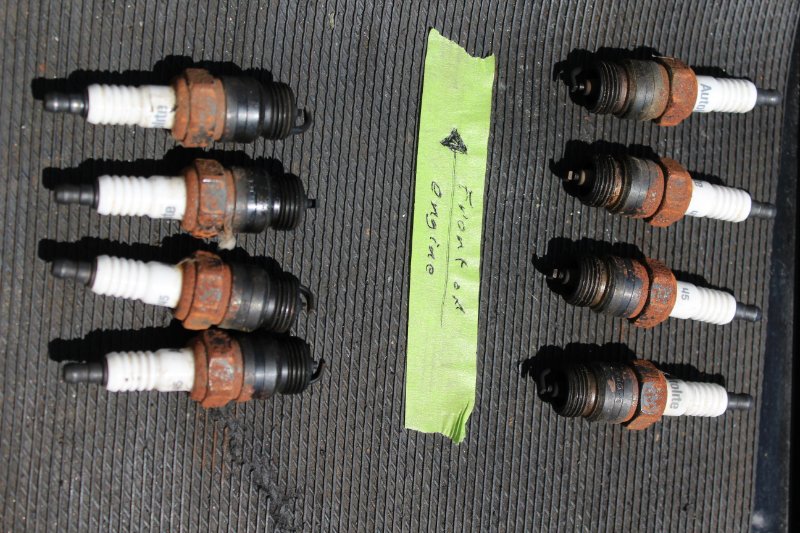
Pulling the spark plugs out and laying them in order can help in determining how the engine ran prior to its overextended hibernation. Here is an image of the plugs out of the 67 289 A code that sat for about 15 years. Having never seen or heard the car run or drive this is a good diagnostic indicator. In this case all cylinders are running pretty even and too rich.