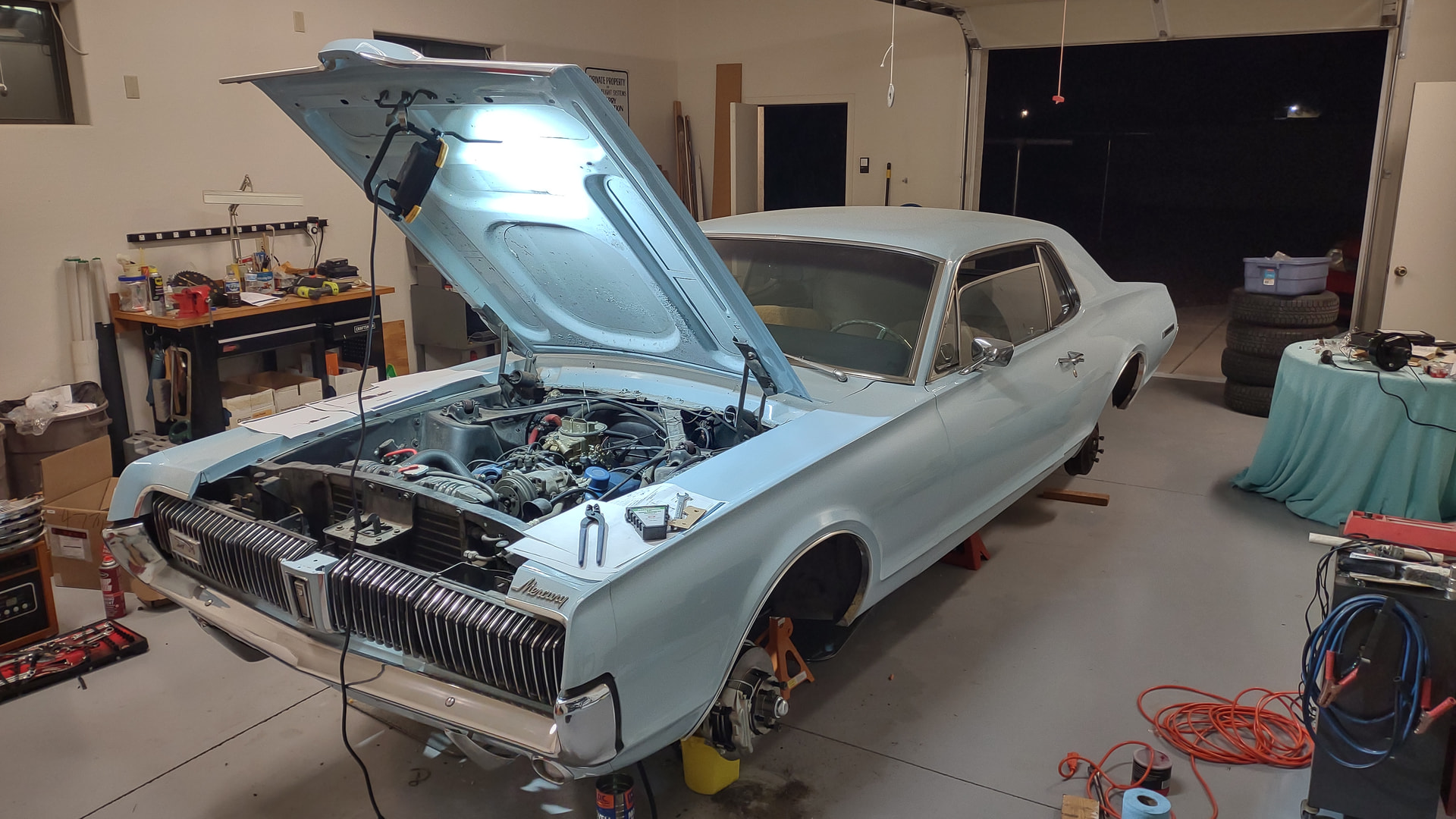
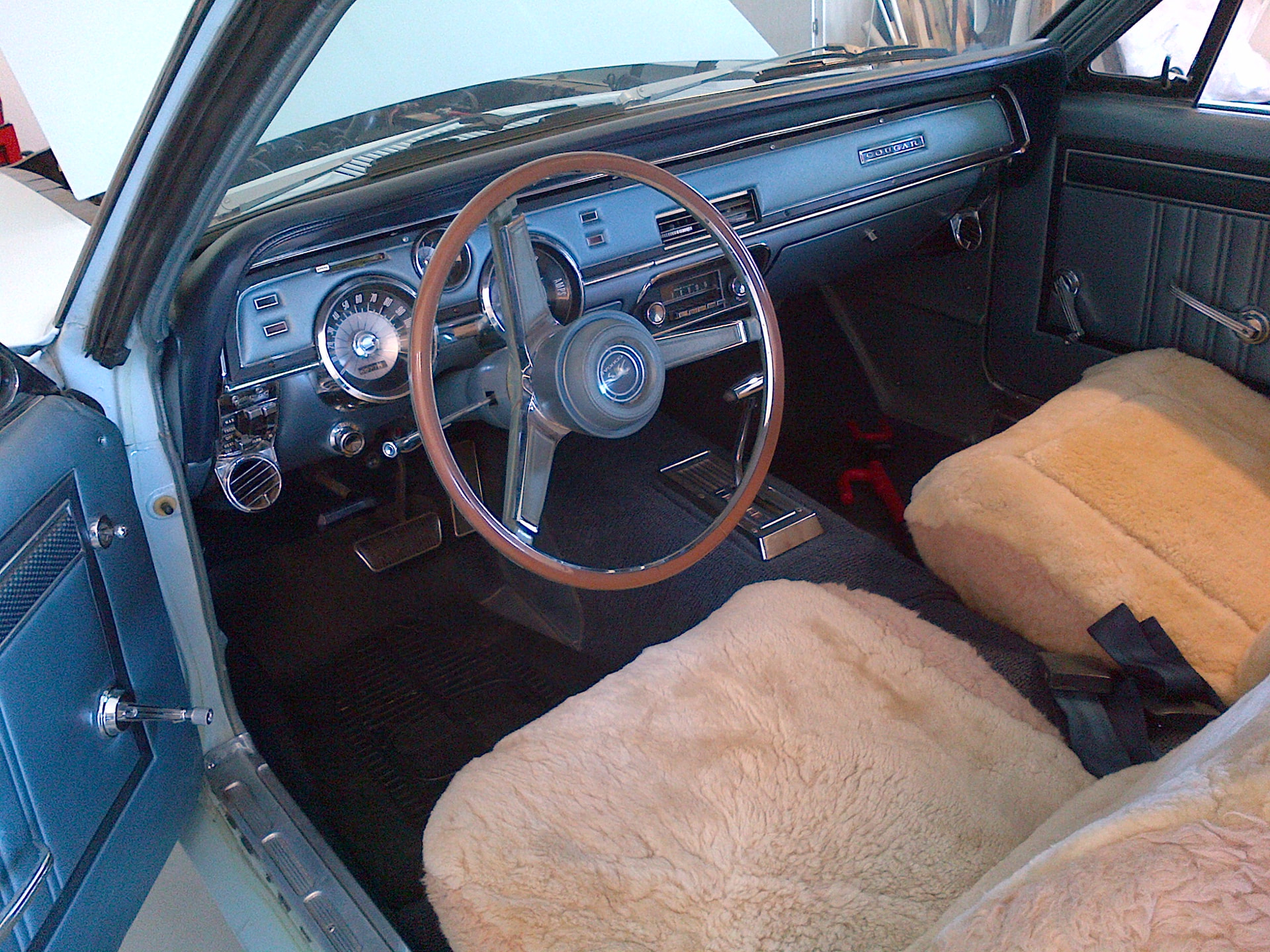
Hello all! New member here; seasoned Ponycar owner but it’s been a LONG time. My first car was a 1968 Mustang convertible, and then in succession I owned a 1966 GT Coupe, a 1967 302 Mustang, a 1967 V-6 Mustang with a stock bench front seat, and then a 1968 Cougar XR7, which I stupidly sold when I was PCS’d to Korea in the early 1990s.
My father-in-law was the original owner of a 1967 Cougar, which has been stored unregistered for many years after having been beautifully restored to box-stock condition. He and I were working to get it back on the road, and then he passed away unexpectedly from a fall two years ago Easter Sunday. Since then, time permitting, I have been wrenching on it, with the intent to maintain it as a tribute to him, since he was the finest man I have ever met and the closest thing to a father figure I ever had.
I look forward to participating and learning from others who have more (recent) expertise than I!
Thank you. It’s been garaged here in Phoenix since it’s restoration. It does run – I have had it running – but it’s been a few years and I don’t know the status of the fuel tank. I have never brought a car out of mothballs before, so it’s a new thing for me.
Thank you very much. When I get home this evening I will be going spelunking through the postings to see what info I can glean. Rabbit hole, here I come.
Welcome! Great looking Cougar, and a very worthwhile tribute! Don’t even try to start it until you flush your gas tank with fresh fuel. The stuff that gas turns into can really mess up your engine. It happened to me.
Is there a way to flush the tank in the car, or do I have to remove it? i genuinely don’t know if there is old fuel in the tank; I will check tomorrow. I don’t even know how to flush it, but I can figure that out.
I dread having to remove it, but hey if I have to, I will. Removing the fuel tank is one of the few things I have never done on one of these, but it’s gotta be easier than removing a fuel cell from an airplane.
When we did have it running, we had fuel in a large mason jar and didn’t use the tank at all.
Luckily, I have an original Ford service manual for this, and it’s crazy-detailed and well-constructed. The step by step makes it a little less scary.
The mason jar was a good idea! I flush mine out every few years by sucking fuel from the hose to the fuel pump with a fluid transfer pump and refilling with fresh fuel. But the original tank is often so full of rust and goo at the bottom that it needs replaced. Replacing the tank isn’t really a bad job at all. You are off to a good start by getting a Shop Manual copy! I am still waiting for the day when I’m not under the hood all the time - lol.
My father in law, the original owner of this car, was an engineer, and he LOVED this car. I have photos of him with it in front of his workplace on the day he bought it, and my mother in law pregnant with my wife. It was his daily driver for many years, and then he restored it and parked it. I have owned five of these cars before – four Mustangs and a Cougar – so I used to know my way around them like the back of my hand. That was a long time ago, but tinkering with this car was part of what helped us bond so strongly, and we worked together on the weirdest projects and had a great time.
I was desperately trying to get it going for him as a surprise gift so he could drive it one more time (with new power disc brakes because no 83-year-old should be trying to push four non-boosted drums) but before could finish it he gashed his head badly in a fall, accelerating his dementia, and then passed away, all within the space of about three months. That was two years ago, and it still hurts to this day.
He was a brilliant, gentle man. He is one of the original patent holders on technology called the Traffic Collision Avoidance System (TCAS), which keeps airliners separated in flight and prevents mid-air collisions, which means the results of his work have made safe travel possible for probably hundreds of billions of travelers since the 1960s, though he would never take credit for any of that. His biggest pride was that both of his daughters were involved in the aviation industry too, there first a process engineer and my wife a commercial-rated pilot who would rather help rebuild an engine with him than dress up and go out. And when I came along, he was the father figure I never had.
I am only now really able to pick up where I left off without a huge empty space in that garage, and I am determined to get it going again this summer. The fuel tank will probably come out tomorrow.
The service manual is an original, and he kept meticulous notes when he did anything to it. Funny that many of those notes are in pencil on the back of draft and prototype TCAS schematics and documentation.
Darn it, sorry for the TMI rambling. It’s just a hint as to why this is so important to me.
Your father in law sounds like a great guy, sorry for your loss. I am also an avionics design engineer, although retired now. I even witnessed some early flight testing for TCAS at the FAA Tech Center in NJ. All those coordinated evasive maneuvers sure made for a nauseating flight - lol!
Thanks for sharing your story and good luck getting the car going. Replacing the gas tank is a straightforward job. Bill Basore can rebuild your sending unit, don’t buy a low-quality reproduction.
Looks like a great project and should be quite easy to get back on the road. Being in the garage in this climate is a lifesaver for sure. Mine sat in a garage in tucson for 20+ years before I bought it and brought back to life again.
your on the right track with the fuel system. I would take off the filler neck and look down into the tank to see the condition of the tank itself. The fuel will most likely be bad by now but it may not have ruined the tank yet so you may just need to drain and refill. If the tank is rusted or corroded its easier to just replace rather then have cleaned and flushed. They are cheap enough and easy to replace. Really just depends on what its current condition is, it may not be as bad as you might think.
Will also probably need to get that carb off and clean out any old fuel along with a gasket set
Stories like yours make this hobby worthwhile. Good on you.
You best course of action is to replace the tanks and the fuel line. Both are much cheaper than the potential problems they can cause. Do not toss the OEM sender. Rebuilt and re-calibrated it will be better than any reproduction.