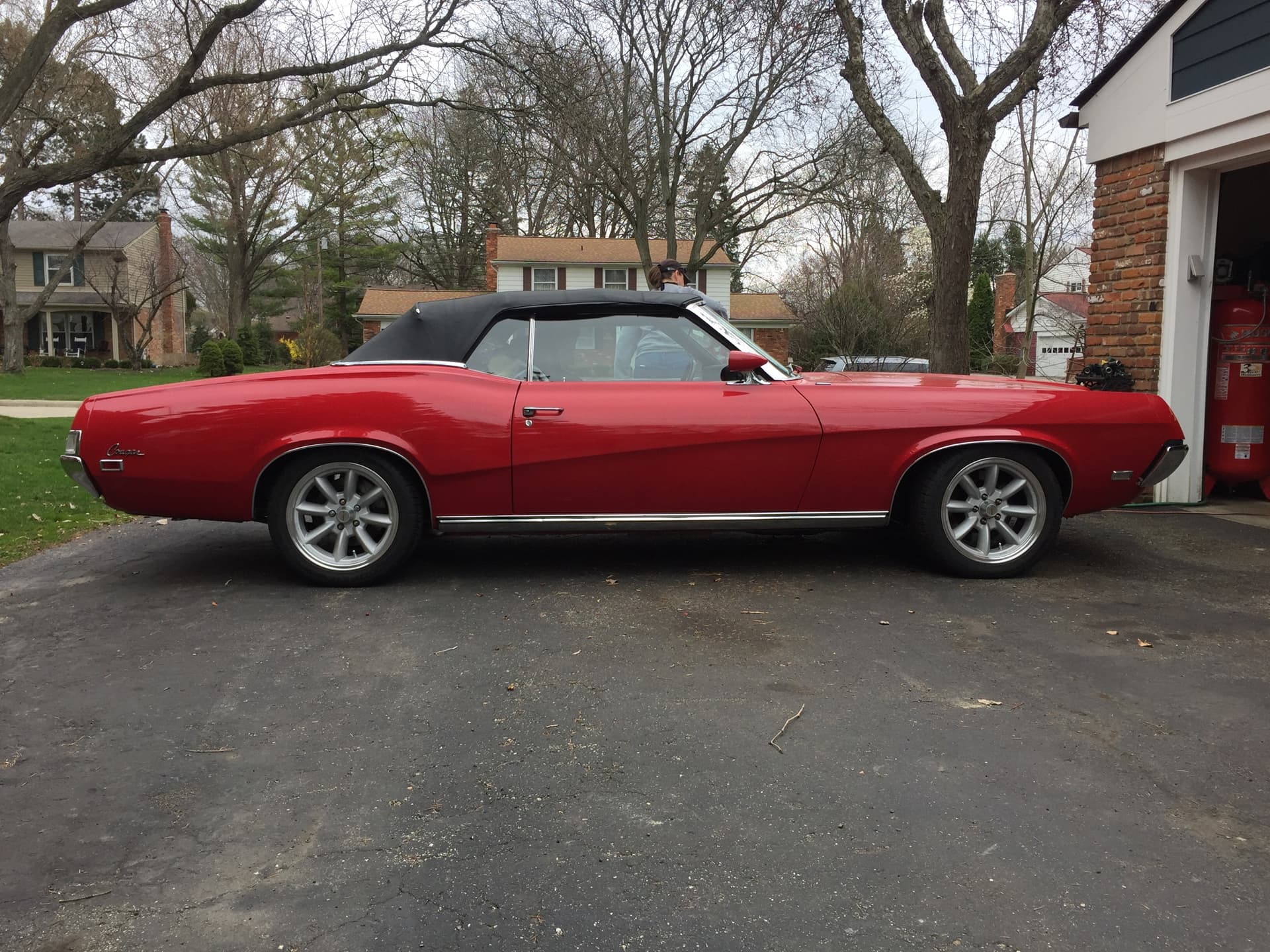
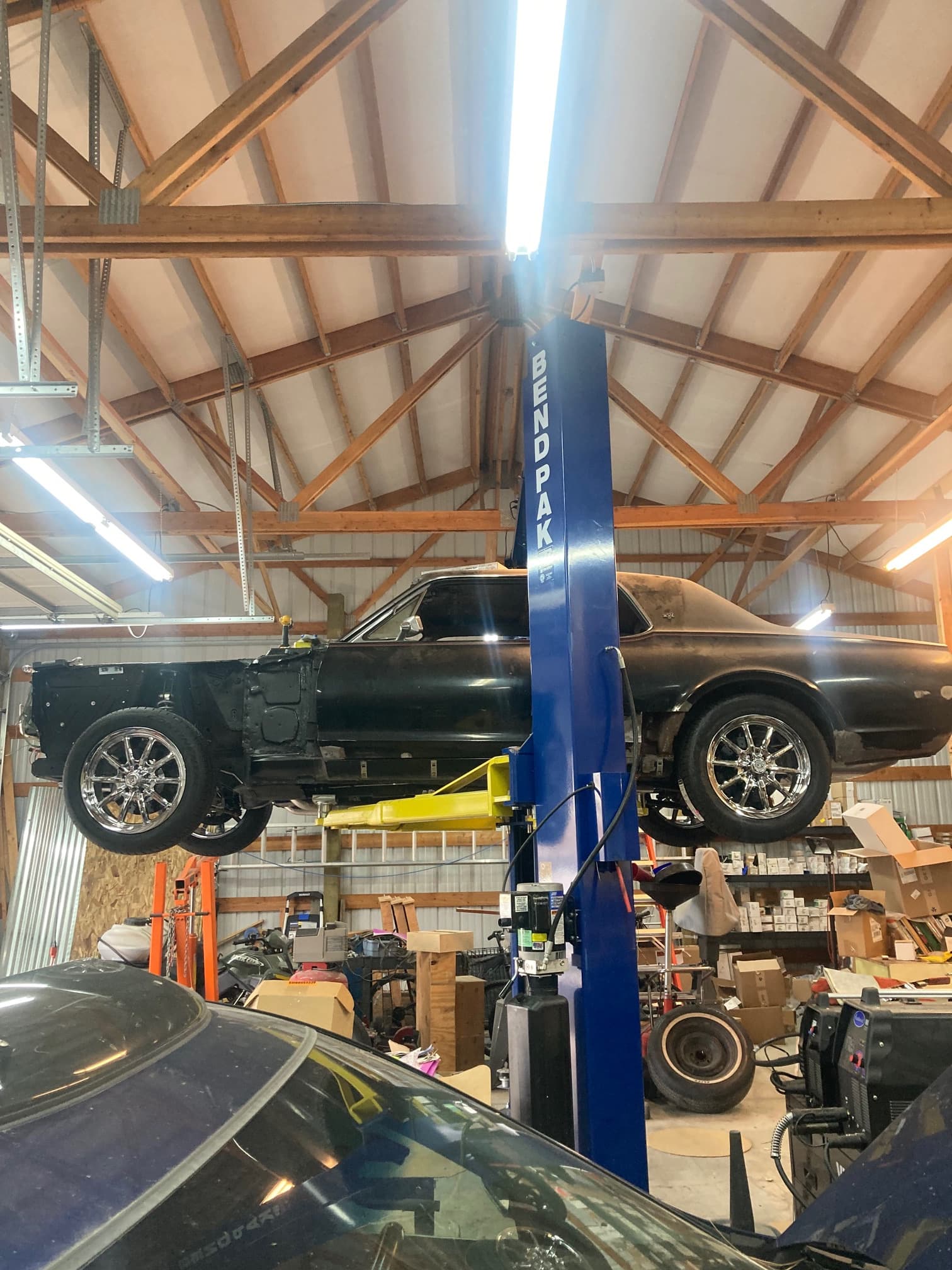
I am looking to substantially lower my car to the same ride height as this car. Other than using airbags, has anyone successfully lowered their car this much? If so, how did you do it?
Thanks.

Imho , 67/68 cougars have 3 lines in the body that are not parallel……upper fender/door line, the lower body line that becomes the wheel arch and the rocker line. To get the clean wedge cougar look, one has to be level to fool your eye. I prefere the lower body/wheel well line to be level. Our 67 was close to the same height in the front but not as low in the rear. Dont think it would be fun with stock ford power steering hardware….first thing to the scene of the accident. We ran a cavilear rack on unisteer hardware, modified for a big block.
Additional issues is EVERYTHING must be above what i would call the frame rails. A good exhaust guy can get the duals up in the drive shaft tunnel and over the rear end.
Speed bumps on a diagional and slow. Have fun
Agreed……..the stock ride height is a little weird by today’s standards though. We generally don’t care for cars that sit down in the rear. I have the springs re - arched to compensate, raising the rear around 2” when doing so.
Just like anything there is a right way and a wrong way lift or lower a vehicle. Brodozers is a good example of the wrong way to do it, brodozer/stance is all about the looks only while a proper setup is about performance with looks second. No reason you can not have both!
the picture in the first post is pretty low, not sure what they have going on there but to get the low of a ride height and keep things right you will most likely need to upgrade and replace most of the front suspension. This may take you away from the original design for something else entirely. There are tons of options out there for suspension kits from coil over kits to IFS kits from the Mustang II
A popular lowering technique is to use 1” lowering coils and the “Shelby drop” this consists of remounting the upper control arm lower to change the geometry slightly for better performance and also lowers the right height slightly. For the rear you can use a lowering block or preferred rearched or lowered springs. Keep in mind the cougar block is a little unique and not just any lowering block will work. This will not get you to the height of the photo but it’s an adorable way to get started and see what you like or don’t like.
Is this going to be a show car? When they get that low you need to have the right trailer to be able to load it. I would use a Sloan Kwik Load. The bed slides back getting the loading angle down to about 5 degrees. In my area that would not be at all driveable on the streets. Any kind of debris is going the be an issue and since we don’t have many storm sewers the crown on the road at cross streets is going to tend to try to high center you.
2 Likes
Wow, great feedback from you all!
Yes, I like the way my “feature” car sits, but will I like the way it drives and at what cost to get there?
Ford Falcon suspension may need a total revamp, which moves me into the restomod category or show car…not wanting to do that.
I had never considered taking into account the body lines in relation to stance…using the lower wheel arch line, that would put the rear a few inches higher than the front.
Lots to consider here.
More thoughts and/or photos are welcomed.
Thanks, guys!
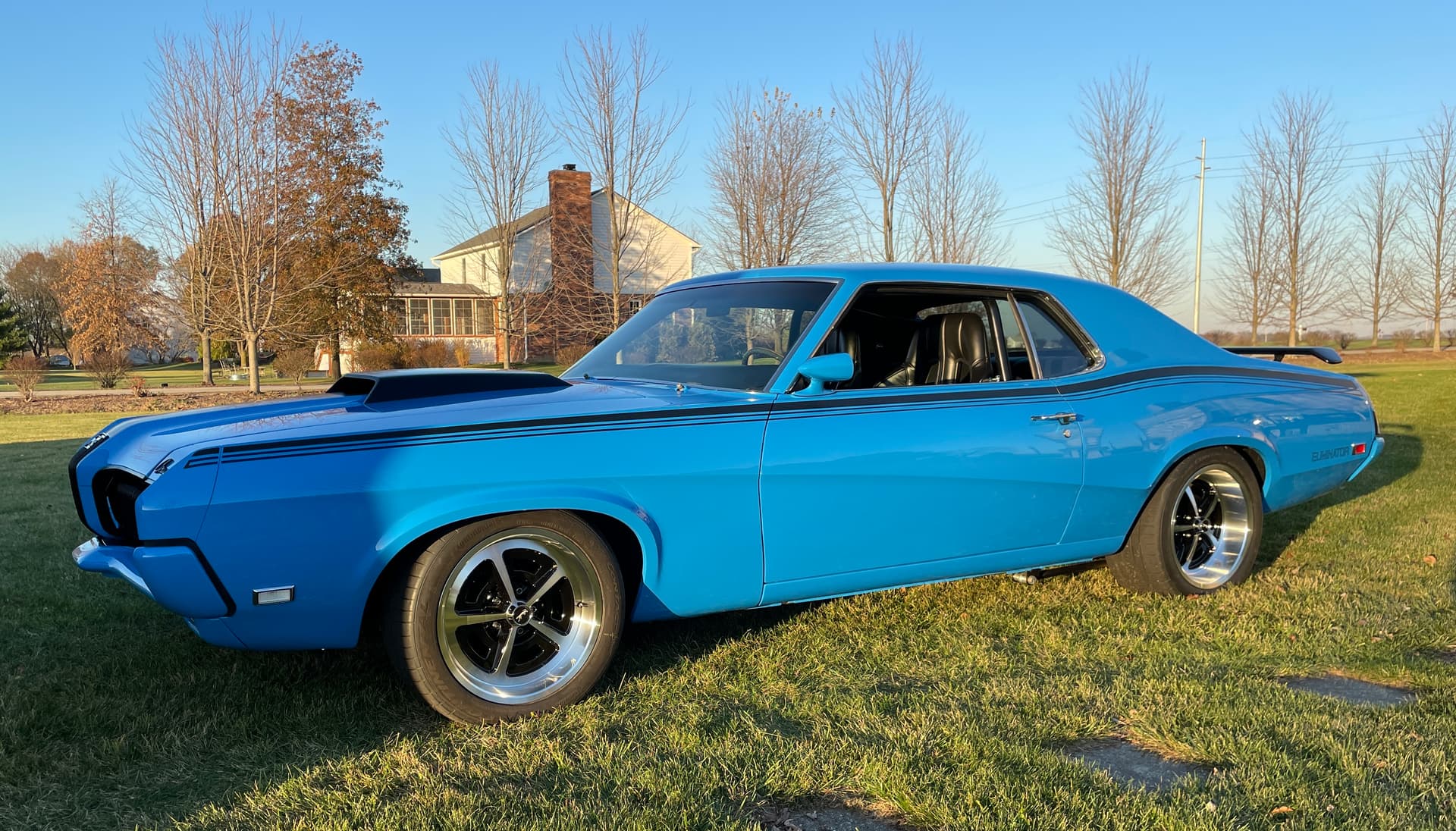
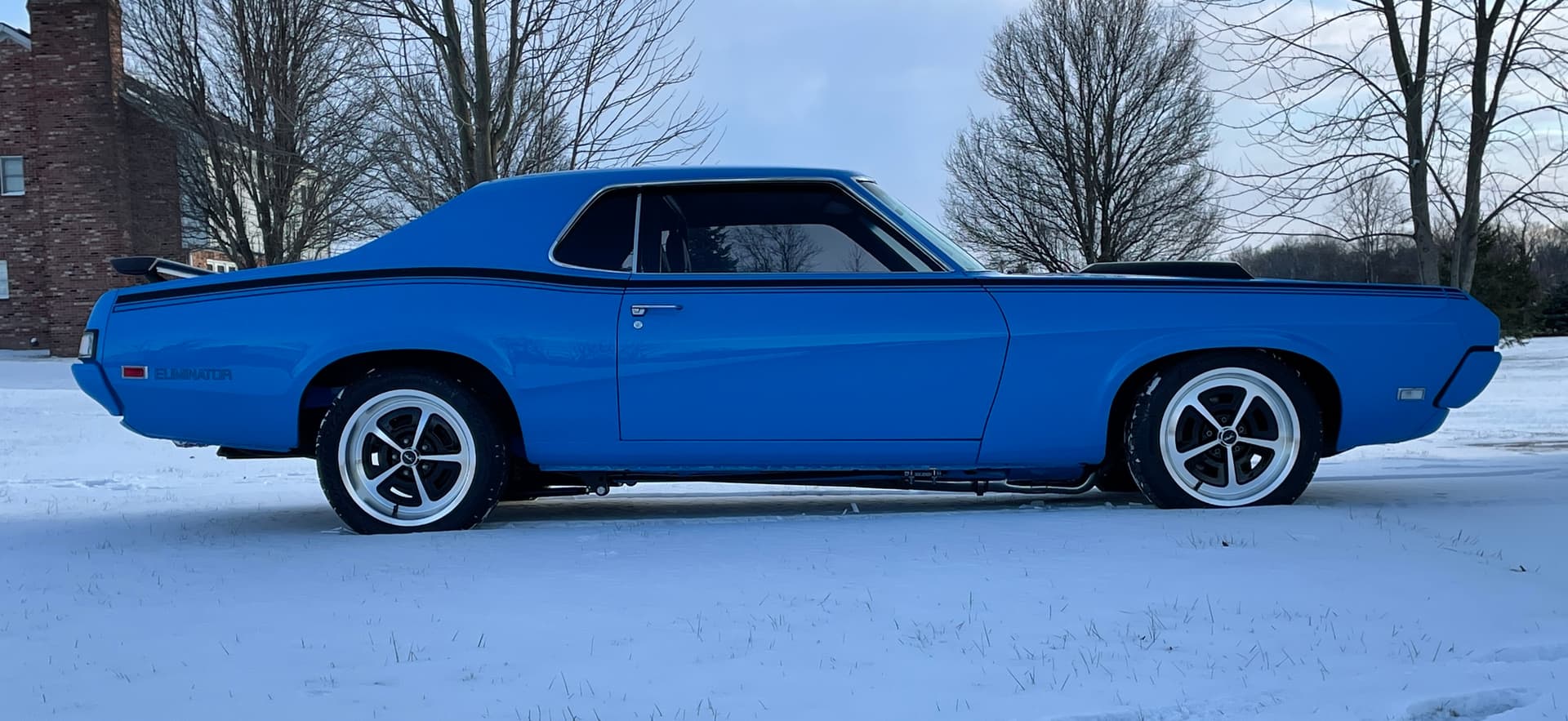
Mine is very similar to the above photo and using all stock mounting points. Caltracs mono leaf out back, spc uppers with Shelby drop and 3 degrees caster built in and global west constant rate lower springs up front. My opinion is that your original post photo shows an extremely undesirable amount of camber and indicates a stock suspension that’s either had bags or hydraulics installed.
3 Likes
That snowy side shot is fire hot.
1 Like
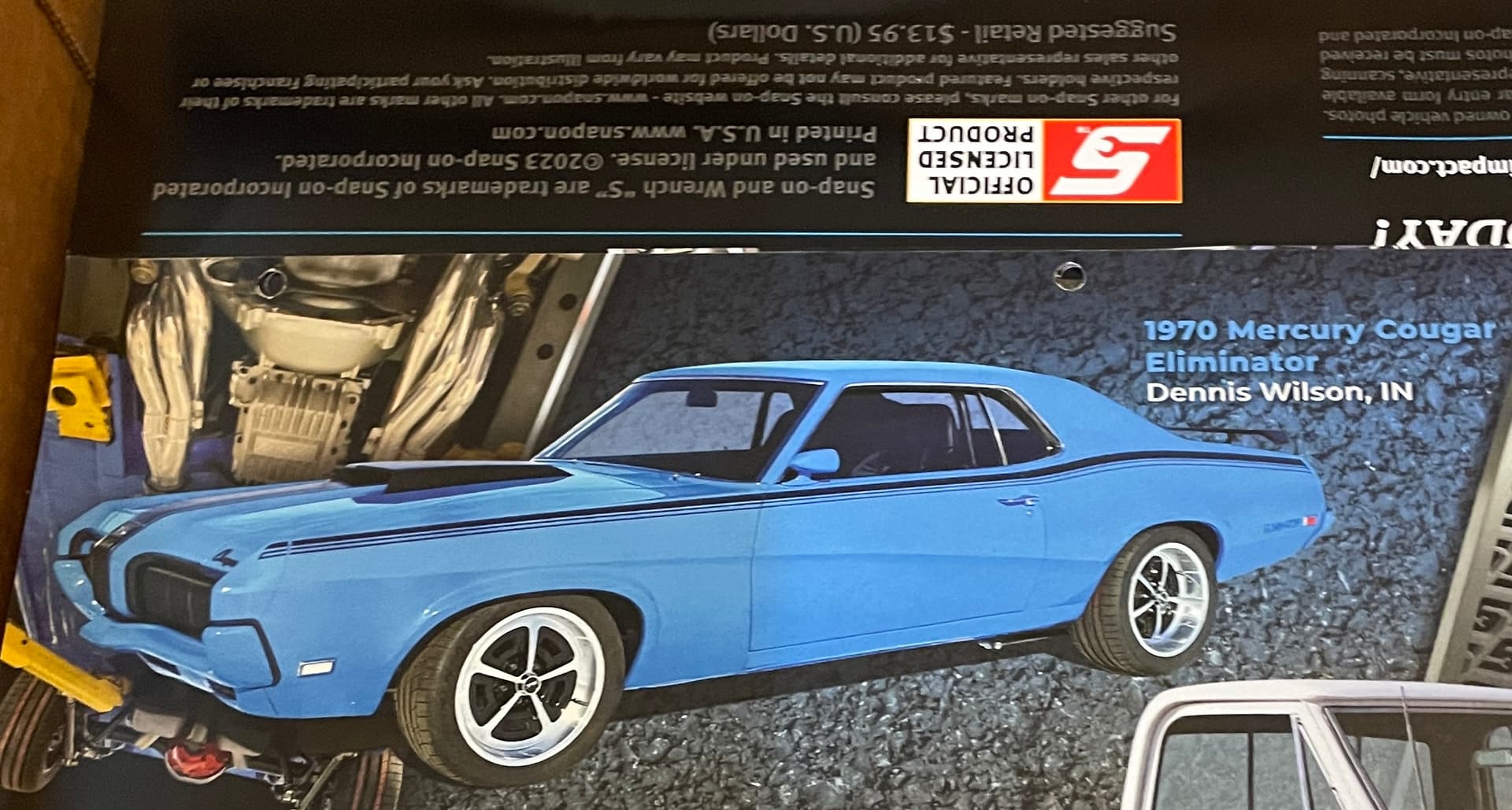
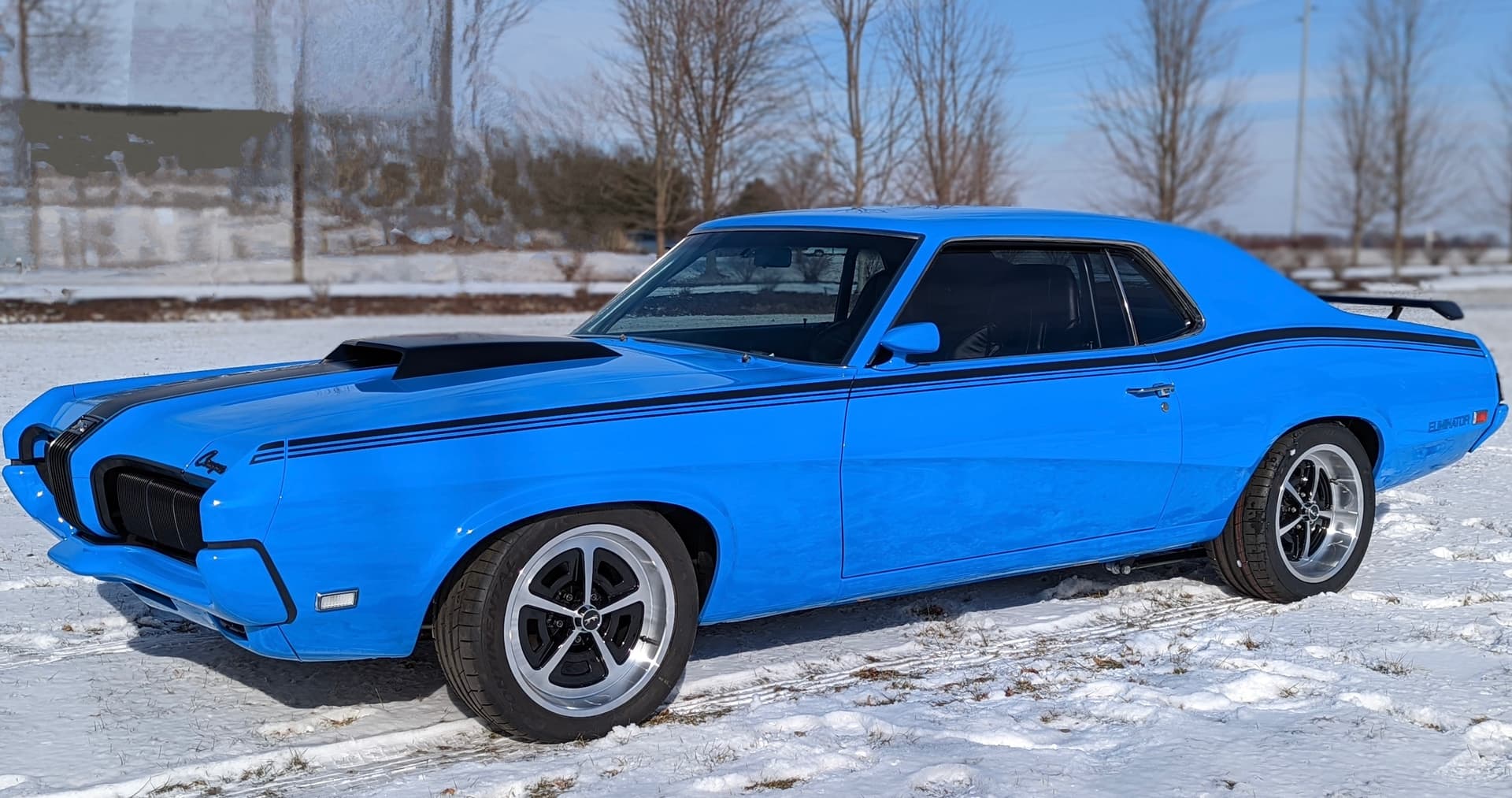
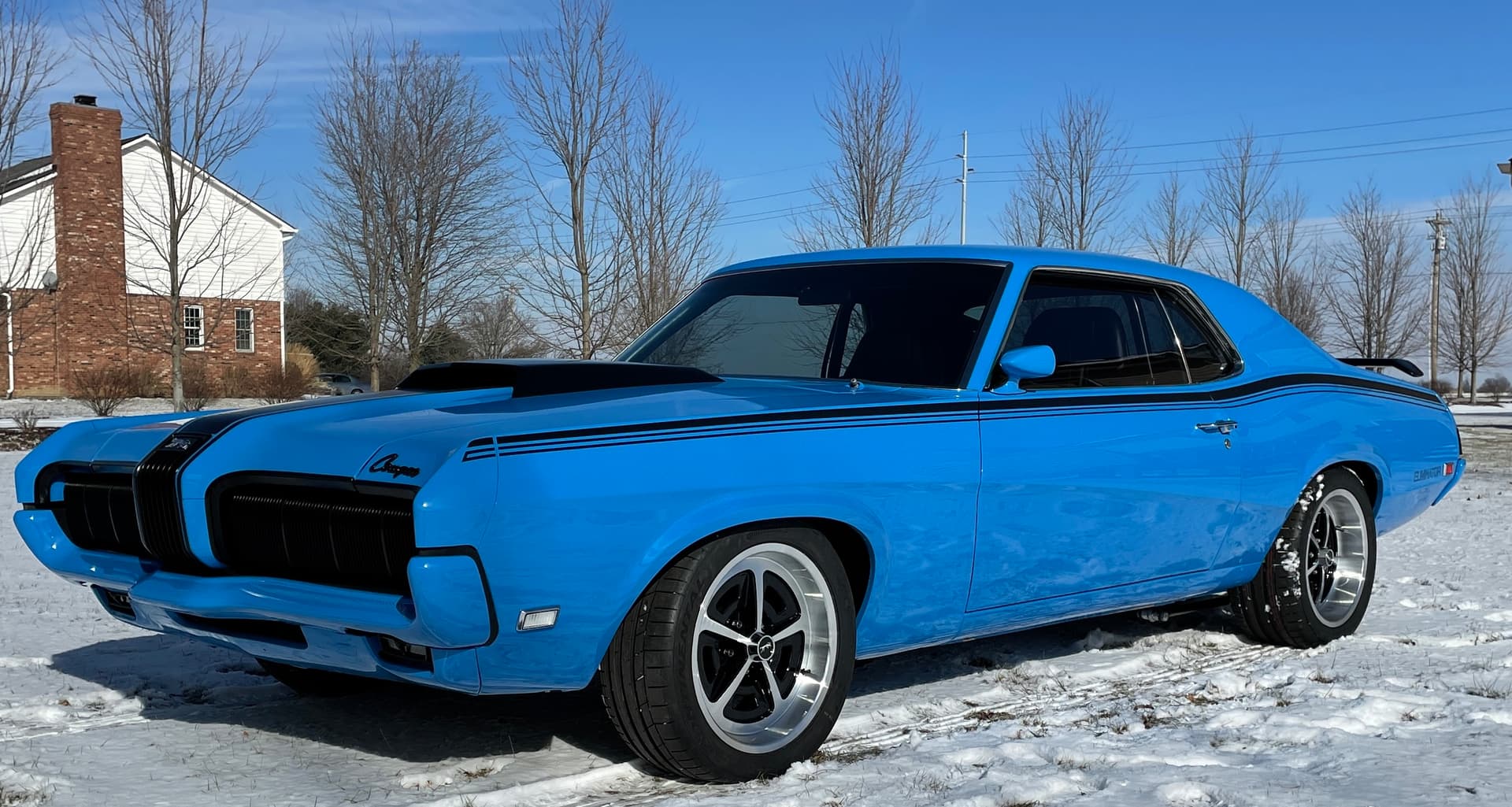
I purchased Pro Touring suspension from Chris Alstons Chassi Works which lowered my 68.
Hi Jim,
Do you have a photo to share?
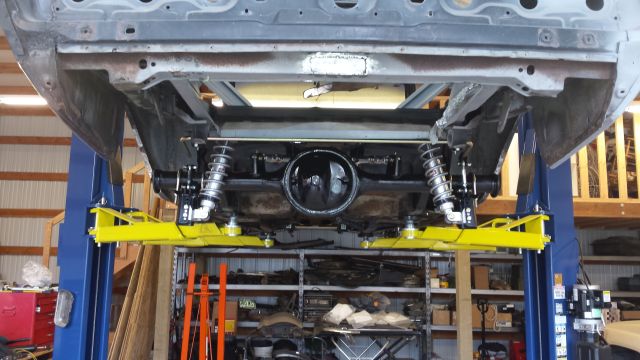

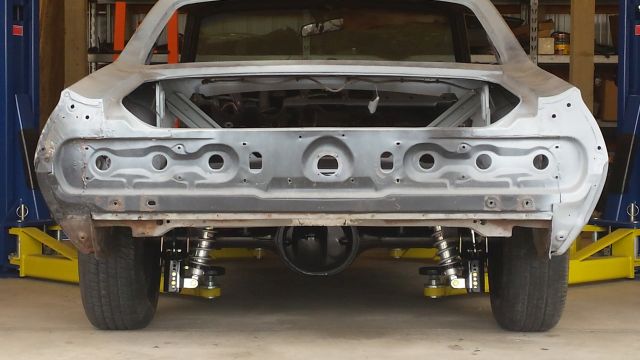
Sweet! Thanks for sharing.
Is the car finished? (Are they ever?) 
For those looking for stance improvement, is there any drawback to the use of 1” lowering coils and the “Shelby drop”?
Not yet. I work too much but will be retiring next spring so I will have plenty of time then. The motor is in and I am installing a new wiring harness now.

1 Like
Serious performance
1 Like
Yes.
-
You will experience bump steer big time once you lower it that way with stock components up front. The cure for this is to do a bump steer kit after you measure and observe the travel of the outer tie rods through the arc of the control arms. You can read up on bump steer with vintage 67-70 Mustang/Cougar/Fairlane all over the place, so I won’t rehash it here.
-
You will experience less suspension travel, so you will need to spring the car for that and use dampers that work with the new range of travel. You will also need to look at the fender to tire fitment if you have wider section width tire or offset wheel. The turning limits also need to be observed so you don’t run the wheels/tires against the upper ball joint and other stuff at full lock. Ball joint wedge kit may be needed to space the ball joint up a bit and prevent binding. It may be at the limit once the suspension is lowered and it travels to the top of movement. You can observe all of this stuff by removing the spring and damper and moving it through full suspension range of motion.
-
You may run out of adjustment on the lower control arm and upper control arms and have to go to a tubular option. It’s also highly probable you will run out of adjustment on one or both strut rods and need a tubular adjustable upgrade for those.
I’ve done the above on my 70 and added camber plates to lock in camber adjustment instead of using the eccentrics, adjustable strut rods, and a Baer bump steer kit. The springs I used were progressive rate, and the dampers are nothing special. I’m currently moving to tubular control arms for the built in caster (what makes radial tires drive the way they should since I don’t use bias ply and never have since I bought it in 19diddly8) and single rate springs with Koni dampers to chase a minor problem with the steering wanting to fall slightly into a turn (oversteer- very slight).
It is not as simple as bagging it or stancing it with a spring set and going cruising. The suspension is designed for a specific ride height and stance, so when you change it you have to look at everything.
The other added feature is the stock oil pan will drag the ground in spirited street driving on uneven surfaces, mostly hitting the drain plug. This can loosen the plug and either have it fall out or the oil will slowly drip out while you’re driving and then you lose an engine. I would recommend a T-pan from whomever you like with a wired drain plug so it can’t come out, and then a skid plate welded to the bottom of the pan, which is what I did.
Additionally, as mentioned, your exhaust can hit the pavement on hard bumps or uneven pavement. if you have headers you will notice they drag and bang, and if you have big squared off welded mufflers you’ll notice they like to grab objects in the road. I always recommend round mufflers and the whole system welded not cheapo clamp together mail order stuff. You may also need adjustable motor mounts to get a little clearance for the engine and exhaust.
3 Likes
I have had no negatives on mine. I wouldn’t say it was massive improvement but noticeable for the better non the less. It’s a very common setup on this platform and can be pretty cost effective too. If you have a little metal working skills you can make a rear block to lower the rear too. I typically do not recommend blocks of any type but generally 1” and under is ok.