Mark, I really like that car. That is awesome.
That little Rocket is a Metropolitan.
A few more pics from said memory card:


I don’t remember what show this is from, but I kept the photo for some reason:

Here are some from SEMA 2008 and 2009:

The hauler above could be used for this next car. The level of detail on this custom is just insane:


Who wouldn’t want a hot-rod Peterbilt?

This entire car is done in the chrome paint process that Don is trying to get going for our dash bezels:

Finally, I believe some of the folks here know this car. I didn’t get to meet the owner but I’m glad I got to see his Cougar!


Y’all are right… don’t know whatever made me think that “pre-Rambler” was a Morris!
Random:


Gotta love the way they did things in the '50s and '60s

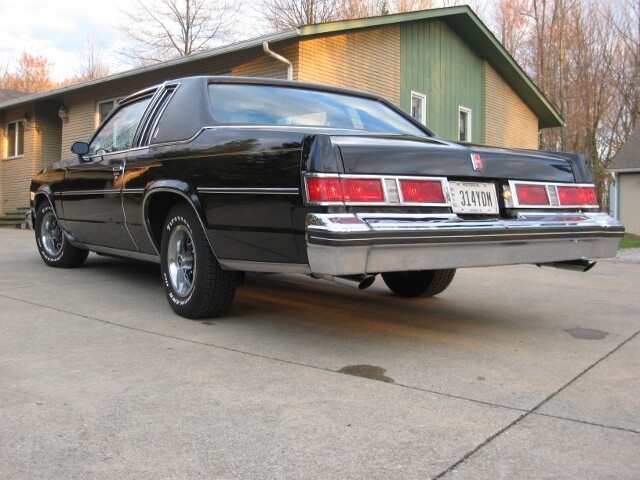
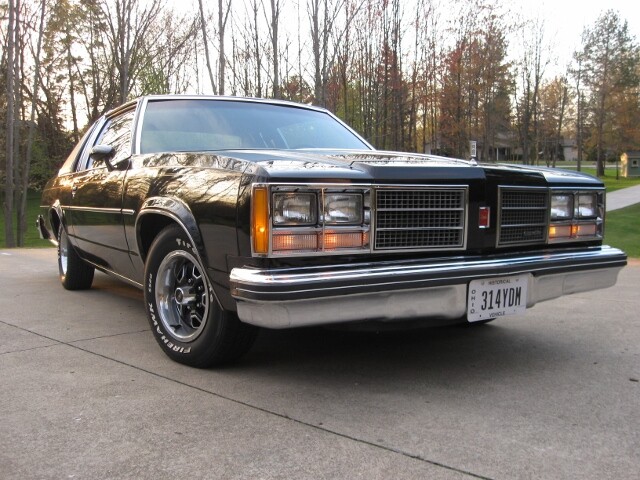
I think something like this would make for a cool daily driver.
I got this in an email titled “Bye Bye Blackbird” about the SR 71 Spy plane. I envy this man:

In April 1986, following an attack on American
soldiers in a Berlin disco, President Reagan
ordered the bombing of Muammar Qaddafi’s
terrorist camps in Libya …
My duty was to fly over Libya , and take
photographs recording the damage our F-111’s
had inflicted.
Qaddafi had established a ‘line of death,’
a territorial marking across the Gulf of Sidra ,
swearing to shoot down any intruder, that crossed
the boundary.
On the morning of April 15, I rocketed past the line at 2,125 mph.
I was piloting the SR-71 spy plane, the world’s
fastest jet, accompanied by a Marine Major (Walt),
the aircraft’s reconnaissance systems officer (RSO).
We had crossed into Libya , and were approaching
our final turn over the bleak desert landscape, when
Walt informed me, that he was receiving missile
launch signals.
I quickly increased our speed, calculating the time
it would take for the weapons, most likely SA-2 and SA-4
surface-to-air missiles, capable of Mach 5 - to reach
our altitude.
I estimated, that we could beat the rocket-powered
missiles to the turn, and stayed our course, betting
our lives on the plane’s performance.
After several agonizingly long seconds, we made
the turn and blasted toward the Mediterranean …
‘You might want to pull it back,’ Walt suggested.
It was then that I noticed I still had the throttles
full forward.
The plane was flying a mile every 1.6 seconds, well
above our Mach 3.2 limit.
It was the fastest we would ever fly.
I pulled the throttles to idle, just south of Sicily ,
but we still overran the refueling tanker, awaiting us
over Gibraltar …
Scores of significant aircraft have been produced,
in the 100 years of flight, following the achievements
of the Wright brothers, which we celebrate in
December.
Aircraft such as the Boeing 707, the F-86 Sabre Jet,
and the P-51 Mustang, are among the important machines,
that have flown our skies.
But the SR-71, also known as the Blackbird, stands alone
as a significant contributor to Cold War victory, and as the
fastest plane ever, and only 93 Air Force pilots, ever steered
the ‘sled,’ as we called our aircraft.
The SR-71, was the brainchild of Kelly Johnson,
the famed Lockheed designer, who created the
P-38, the F-104 Starfighter, and the U-2.
After the Soviets shot down Gary Powers U-2 in 1960,
Johnson began to develop an aircraft, that would
fly three miles higher, and five times faster, than
the spy plane, and still be capable of photographing
your license plate.
However, flying at 2,000 mph would create intense heat
on the aircraft’s skin.
Lockheed engineers used a titanium alloy, to construct
more than 90 percent of the SR-71, creating special tools,
and manufacturing procedures to hand-build each of the
(40 planes… (WoW ! ! ! 40 planes??? I thought only 7.)
Special heat-resistant fuel, oil, and hydraulic fluids, that
would function at 85,000 feet, and higher, also had to be
developed.
In 1962, the first Blackbird successfully flew, and
in 1966, the same year I graduated from high school,
the Air Force began flying operational SR-71 missions.
I came to the program in 1983, with a sterling record
and a recommendation from my commander,
completing the weeklong interview, and meeting
Walt, my partner for the next four years.
He would ride four feet behind me, working all the
cameras, radios, and electronic jamming equipment.
I joked, that if we were ever captured, he was the spy,
and I was just the driver.
He told me to keep the pointy end forward.
We trained for a year, flying out of Beale AFB in
California , Kadena Airbase in Okinawa , and RAF
Mildenhall in England …
On a typical training mission, we would take off near
Sacramento , refuel over Nevada , accelerate into Montana ,
obtain a high Mach speed over Colorado , turn right over
New Mexico, speed across the Los Angeles Basin, run up
the West Coast, turn right at Seattle , then return to Beale.
Total flight time:- Two Hours and Forty Minutes.
One day, high above Arizona , we were monitoring
the radio traffic, of all the mortal airplanes below us.
First, a Cessna pilot asked the air traffic controllers
to check his ground speed. ‘Ninety knots,’ ATC replied.
A Bonanza soon made the same request.
‘One-twenty on the ground,’ was the reply.
To our surprise, a navy F-18 came over the radio, with a
ground speed check.
I knew exactly what he was doing.
Of course, he had a ground speed indicator in his cockpit,
but he wanted to let all the bug-smashers in the valley,
know what real speed was, ‘Dusty 52, we show you at 620
on the ground,’ ATC responded.
The situation was too ripe.
I heard the click of Walt’s mike button in the rear seat.
In his most innocent voice, Walt startled the controller
by asking for a ground speed check from 81,000 feet,
clearly above controlled airspace.
In a cool, professional voice, the controller replied,
‘Aspen 20, I show you at 1,982 knots on the ground.’
We did not hear another transmission on that
frequency, all the way to the coast.
The Blackbird always showed us something new,
each aircraft possessing its own unique personality.
In time, we realized we were flying a national treasure.
When we taxied out of our revetments for take-off,
people took notice.
Traffic congregated near the airfield fences, because
everyone wanted to see, and hear the mighty SR-71.
You could not be a part of this program, and not come
to love the airplane.
Slowly, she revealed her secrets to us, as we earned
her trust…
One moonless night, while flying a routine training
mission over the Pacific, I wondered what the sky
would look like from 84,000 feet, if the cockpit lighting
were dark.
While heading home on a straight course, I slowly turned
down all of the lighting, reducing the glare and revealing
the night sky.
Within seconds, I turned the lights back up, fearful that the
jet would know, and somehow punish me.
But my desire to see the sky, overruled my caution,
I dimmed the lighting again.
To my amazement, I saw a bright light outside
my window.
As my eyes adjusted to the view, I realized that the
brilliance was the broad expanse of the Milky Way,
now a gleaming stripe across the sky.
Where dark spaces in the sky, had usually existed,
there were now dense clusters, of sparkling stars.
Shooting Stars, flashed across the canvas every
few seconds.
It was like a fireworks display with no sound.
I knew I had to get my eyes back on the instruments,
and reluctantly, I brought my attention back inside.
To my surprise, with the cockpit lighting still off,
I could see every gauge, lit by starlight.
In the plane’s mirrors, I could see the eerie shine of
my gold spacesuit, incandescently illuminated, in a
celestial glow.
I stole one last glance out the window.
Despite our speed, we seemed still before the
heavens, humbled in the radiance of a much greater
power.
For those few moments, I felt a part of something far
more significant, than anything we were doing in the plane.
The sharp sound of Walt’s voice on the radio, brought me
back to the tasks at hand, as I prepared for our descent.
San Diego Aerospace Museum
The SR-71 was an expensive aircraft to operate.
The most significant cost was tanker support, and in 1990, confronted with budget cutbacks, the Air
Force retired the SR-71.
The SR-71 served six presidents, protecting America
for a quarter of a century.
Unbeknown to most of the country, the plane flew
over North Vietnam, Red China, North Korea, the
Middle East, South Africa, Cuba, Nicaragua, Iran, Libya,
and the Falkland Islands.
On a weekly basis, the SR-71, kept watch over every
Soviet Nuclear Submarine, Mobile Missile Site,
and all of their troop movements.
It was a key factor in winning the Cold War.
I am proud to say, I flew about 500 hours in this
aircraft.
I knew her well.
She gave way to no plane, proudly dragging her
Sonic Boom through enemy backyards, with great impunity.
She defeated every missile, outran every MiG, and always
brought us home.In the first 100 years of manned flight, no aircraft was more remarkable.
The Blackbird had outrun nearly 4,000 missiles,
not once taking a scratch from enemy fire.
On her final flight, the Blackbird, destined for
the Smithsonian National Air and Space Museum ,
sped from Los Angeles to Washington
in 64 Minutes, averaging 2,145 mph, and
setting four speed records.
Is that an Oldmansmobile?? Looks pretty clean…
Awesome, amazing, (gotta say it twice) AMAZING 'Bird. And congratualations on being allowed to pilot her.
Two planes in which I’d like to ride:
An old Douglas DC-3, equipped “as delivered” in 1942 USArmy Air Corps-spec livery; jump racks, insignae and all; just as the three planes my Dad flew from England out over Western Europe. All three enabled him to “drive the bus” and deliver troops over western Europe; and all three delivered him back to base in more-or-less one piece, no matter how many parts “took flak” and/or were shot off. It apparently could maintain flight with a lot less “mission-critical parts” than were listed in the manual.
The other plane, is a Blackbird. C’mon, it’s a BLACKBIRD! You can speak that sentence in only slightly less time than it takes to cross the average American state. That’s just COOOOOOLLLL.
Almost got to see one in the '70s as it suffered some small malady, forcing it to spend the night at an Army “testing installation” in southern Arizona. The same Gooney-Bird jockey from the C-47 story was by that time the Airspace Officer at the small but ‘strategically important’ base; and had to go out at 9PM and sign off on the security measures for the strip and the entire facility, for that night and through the next morning.
He asked his son if he wanted to go along; but my Mom said no, I had school in the morning. Never got to see it “up close and personal”, not even from 100 feet…
D@mmit.
I was stationed at Beale AFB and got to see them all the time along with the U2.
Nothing prettier then seeing a Blackbird take off at night.
Troy, no offense, man, but I’ve got one thing to say…
YOU SUCK! I HATE YOU! 
Okay maybe that was a little harsh… How about “You lucky devil; I’m quite jealous, you know” 
Oldmansmobile… LMAO! Actually the Rocket 350 is surprisingly “sprite”. Flowmaster exhaust woke that thing right up.
I got to see an SR-71 up close. Even got to touch it. Parked at an Air Force museum somewhere down in the Florida panhandle, near Eglin I think? I was down there for work, only time I ever been in a helicopter, while we were capturing noise data on the TH-57. Fun time.
Craziest plane I ever saw though was a Harrier, did a quick vertical landing and takeoff on the Tarmac of an airfield I was on collecting noise data on the A-10. Seeing an A-10 fly as dirty, low and slow as possible was pretty amazing. But having the clown piloting the Harrier do his VLTO literally a couple hundred feet from where we were sitting, was quite memorable.
As a guy who does all kinda airplane noise stuff for my living, I can tell you that the B-52 is one of the loudest aircraft ever. Right up there in the top few. I also saw one of them up close at that same Air Force museum.
I just searched for Air Force Museum Eglin on Google maps-- if you zoom in you can see the SR-71 and B-52 parked right next to each other. Man does that make the SR-71 look small, which it sure isn’t.
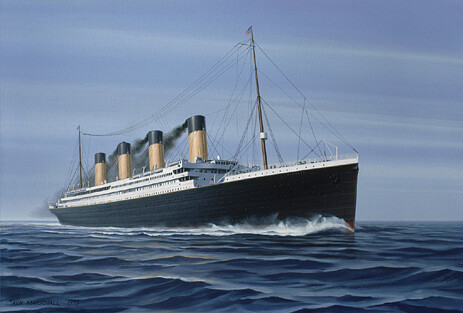
Ok how about this random vehicle, Titanic. Her date with history April 14, 1912. May God bless the memory of the souls lost on that cold night.
Steven

Good one, Steven…can’t believe I forgot about that. Spent quite a bit of time with the Titanic bug, after reading Clive Cusslers “Raise the Titanic!”…think that was '85/'86-ish.
I remember the NG issue after it had been found…wore that magazine out, studying every picture, reading every word, over and over. Tons of “what if’s” on that ship.
I’ve still have the Titanic bug. My grandmother’s aunt was a Titanic survivor from 3rd class. She was immigrating from Ireland to America. My grandma first told me of the Titanic when I was in 3rd grade. She said her daddy’s sister returned back to Ireland after the accident. My mother took me to the library and we looked at micro film copies of newspaper articles about the sinking (pre Internet days). I guess that was about 1975. The first book I read was Walter Lords “A Night to Remember” followed by Raise the Titanic.
Beautiful ships of the era and the craftsmanship is what set White Star Lines Olympic class of ships above the rest.
Steven
A Night To Remember…have that one, as well!