I’m probably wrong but I thought the position of the fan should be 2/3 in the shroud and 1/3 out of the shroud or there abouts
3 Likes
Yes, that is the factory shroud position for the fan on my 70 as well. The fan bolts should not contact the water pump bearing. They thread through the clearance holes in the water pump pulley into the water pump hub which is well forward of the bearing.
That checks out.
I am realizing that the flex blade fan had a larger spacer. With the new 7 blade fan and clutch, ill need a smaller spacer to get the distance correct. Just need to figure out which one to get.
Typically no spacer if you have a clutch. The fan blade bolts to the clutch and the clutch to the water pump
2 Likes
Well in that case I’ll absolutely need shorter bolts
I also had to go to shorter bolts when I went from flex fan with spacer to clutch fan.
No spacer with a fan clutch. Bolts are 5/16-24 X 1" with a lockwasher.
Distance from clutch to radiator is irrelevant, blades should protrude from the shroud 1/3 to 1/2 the blade depth.
2 Likes
Murray 2706 Fan clutch with 1-3/4 offset on a 1970 Cougar w/ 351C-4V and 24’ Radiator. WCCC “Big block” 7 blade fan conversion.
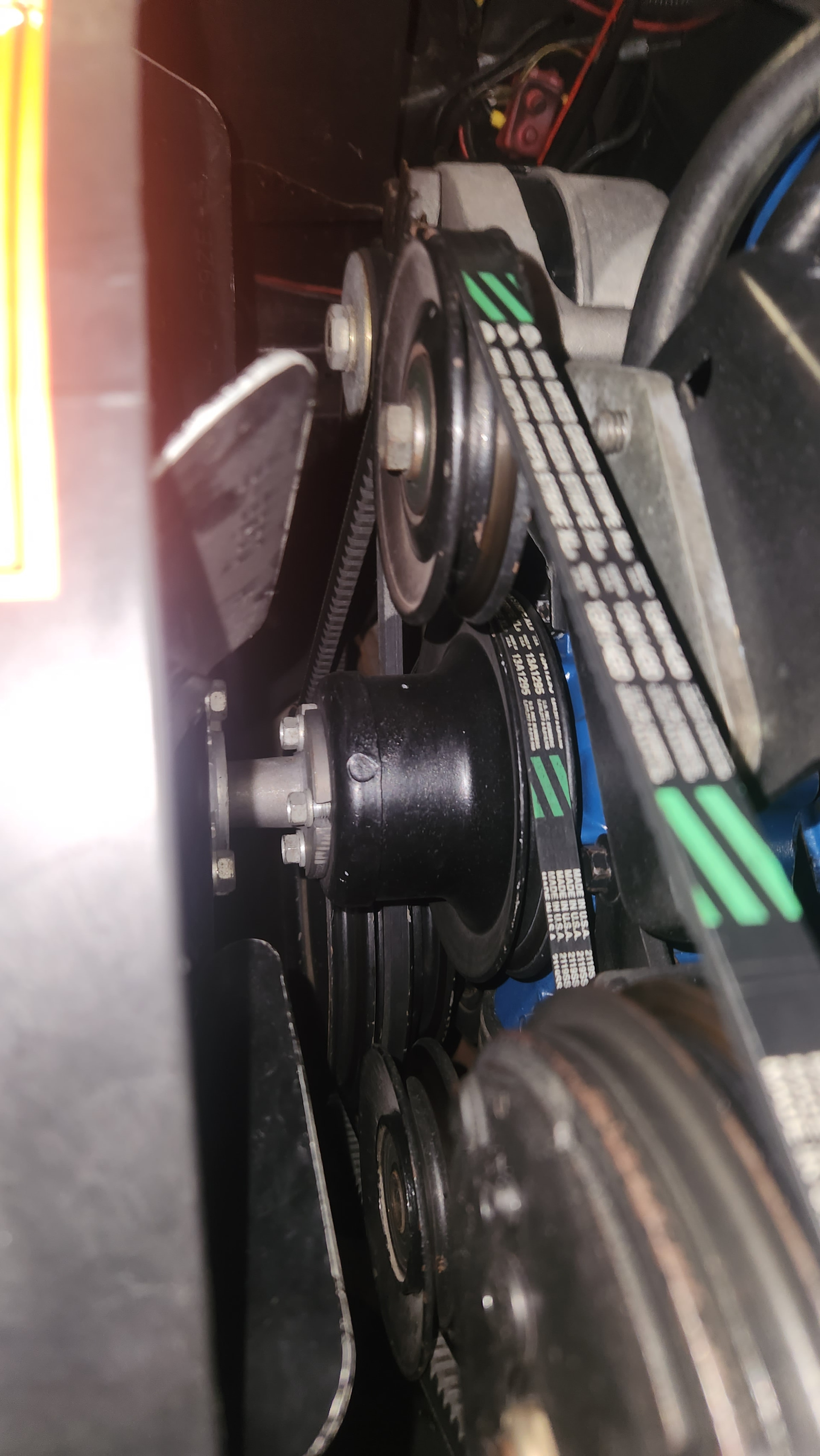
3 Likes
Got everything back together just to realize that the previous owner jury rigged a fan shroud for a 20 inch radiator onto a 24 inch.
So that shroud fit the smaller flex fan but now won’t fit the new fan and clutch. Once the new one gets here it, I’ll find out if everything is kosher.
2 Likes
It’s amazing how hard people work to make things worse. It seems there is an endless amount of money for band aid fixes and no money for fixing what is broken or worn out. There are definitely modern solutions to old problems worth using, electronic ignition replacing points is an example. But you have to remember that there is at least one way that you can know will actually work.
4 Likes
Amen brother!!!
New water pump, fan, fan clutch, and shroud are finally in. I’ll be able to test the set up this weekend.
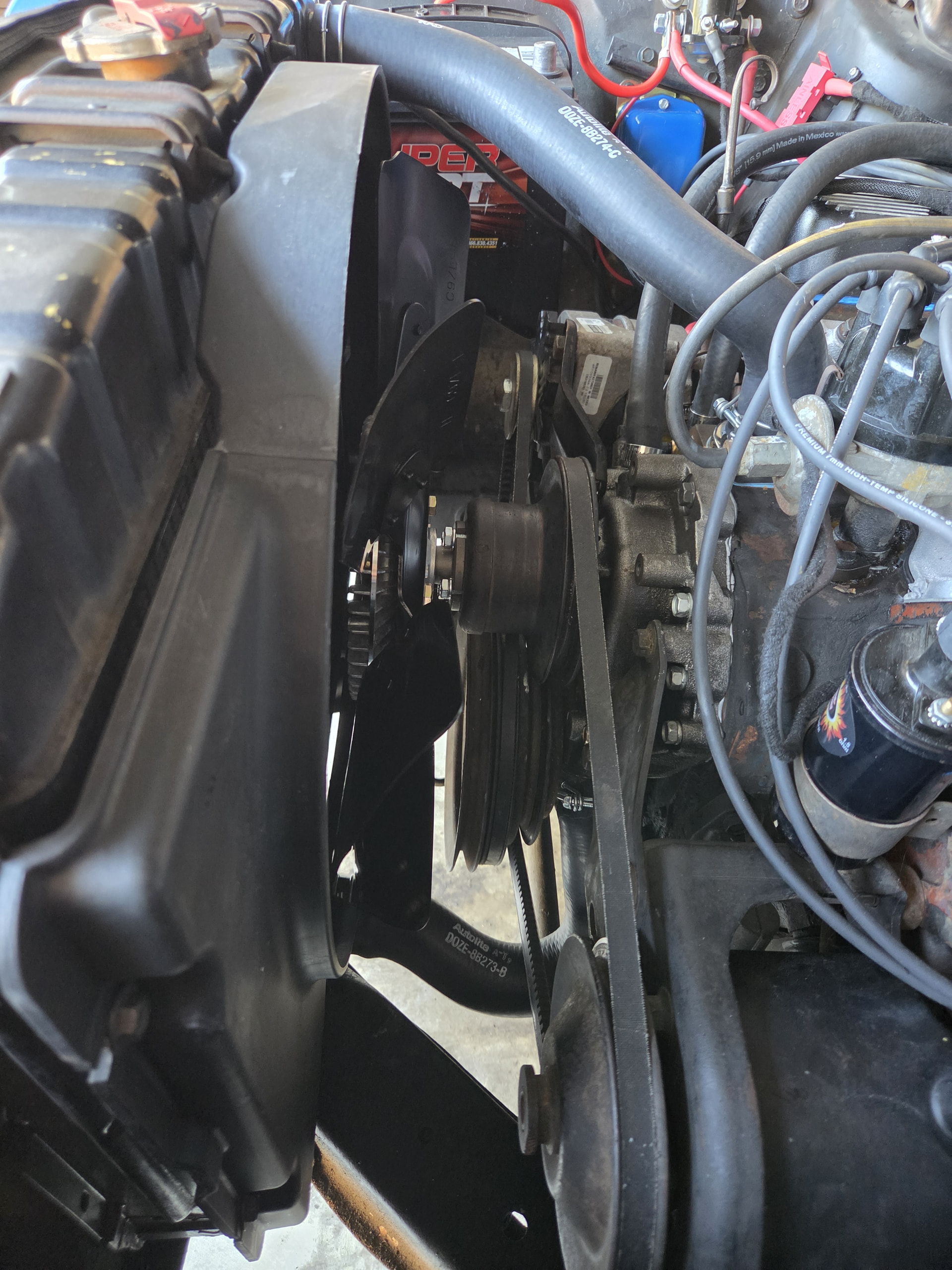
1 Like
Your fan clutch shaft is a bit short for the 351C, which causes the fan blades to be mostly outside the shroud. The blades should be 1/3 to 1/2 inside the shroud. But you may be OK.
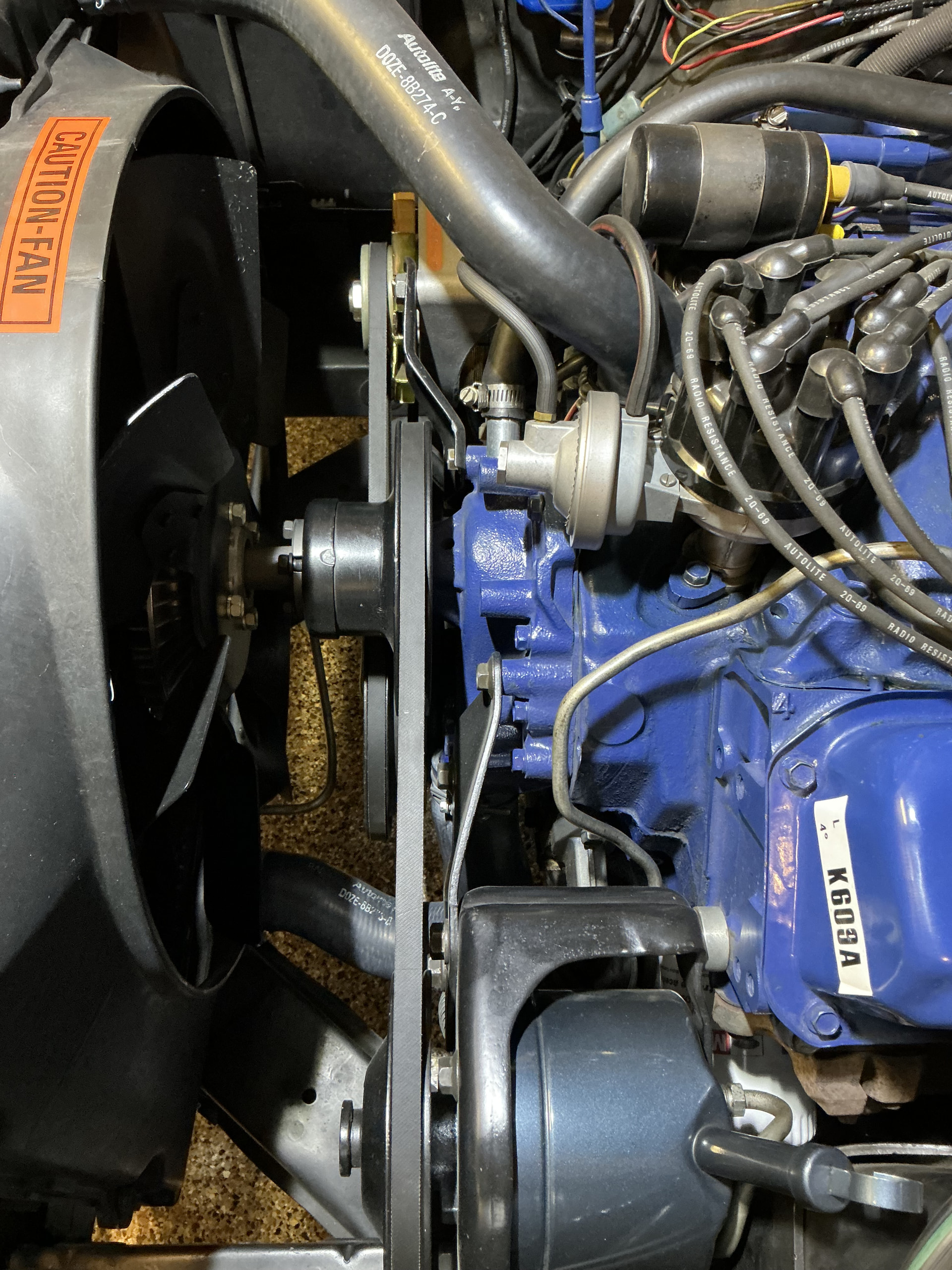
I also thought it was a little short. The new fan shroud is shorter than the old one which i wasnt expecting. Worst case I get a small spacer.
1 Like
It’s always something, isn’t it? At least your fan won’t hit the shroud! The factory and repro shrouds (which yours is not) extend back 2 7/8” from the radiator core.
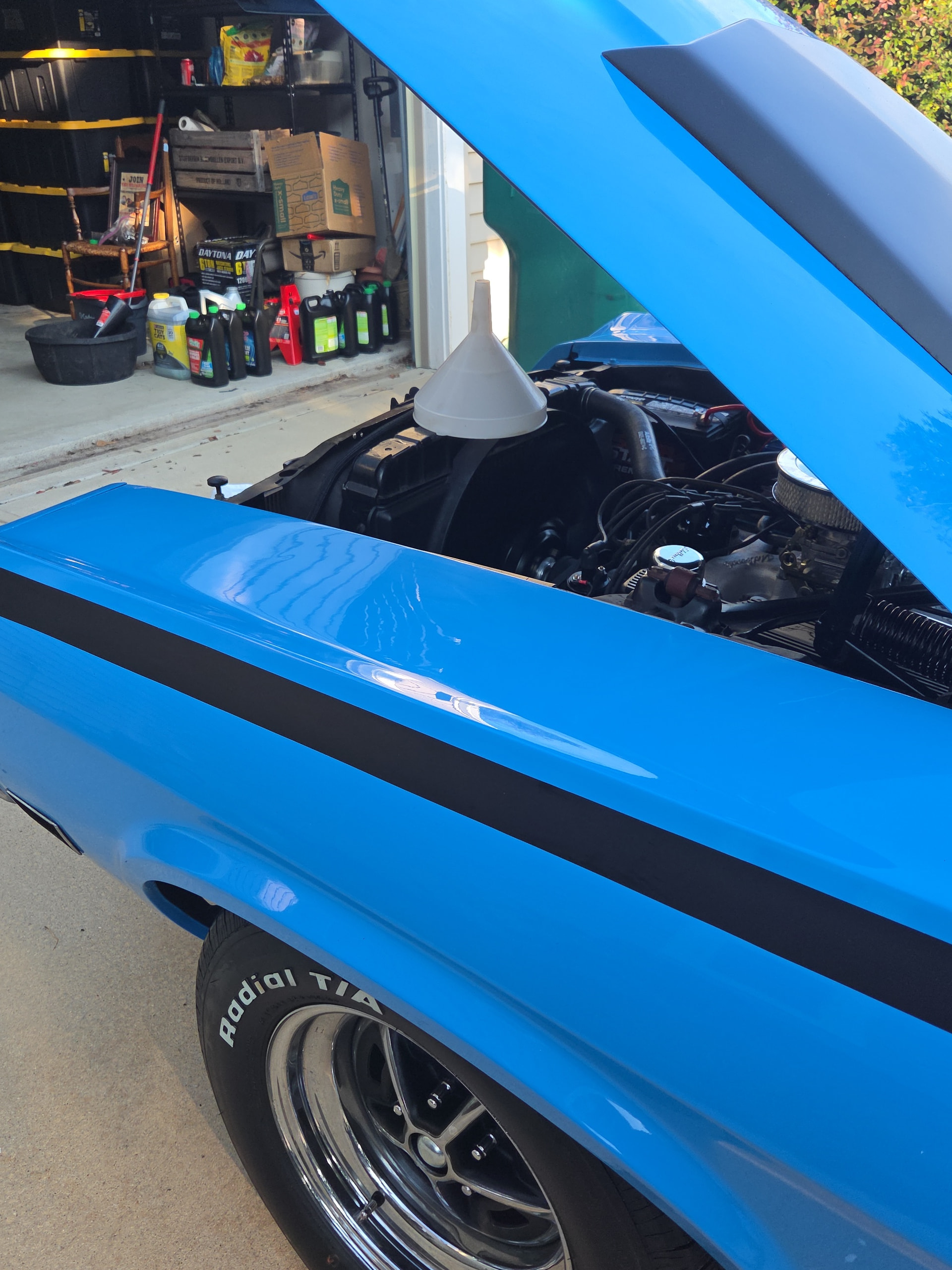
After a better part of a month, it looks like all the new parts fixed the high temp issues. Needle is holding just left of center now.
Ive got it on a slight incline trying to burp any air pockets now. Still blows my mind how hot these old engine bays can get.
5 Likes
Well im back to square one.
Took a drive this afternoon and the temp began to spike significantly. When I got home and turned it off, the engine dieseled which is a first time for me.
I notcied that I also had a small leak at the water neck hose, so I fixed that and added more coolant.
Whats weird is that last week I drove it the entire day. Even when it was 98 out in stop and go traffic the temp stayed center.
Wondering if the thermostat might be sticking, then popping free?
Just some thoughts…
- Didn’t see anywhere above where you verified the temperature gauge indication. (IR gun or another gauge)
- Assuming you applied RTV to thermostat housing and waterpump, have seen excess break loose and plug things up.
- Did you verify engine ran clean when you flushed it? (Assuming you did this given the work you performed)
As a side note, the paint on your car looks beautiful!
My block looked like yours, and it was so gunked up with rusty sediment that I could not flush it clean. I did all the same stuff as you, but still had to pull the engine and rod out the coolant passages before the cooling system would work properly.
But before you go that far, make sure you really have an overheating problem. Agree with JimW suggestion to use an infrared thermometer to see what your actual temps are at the temp sender.