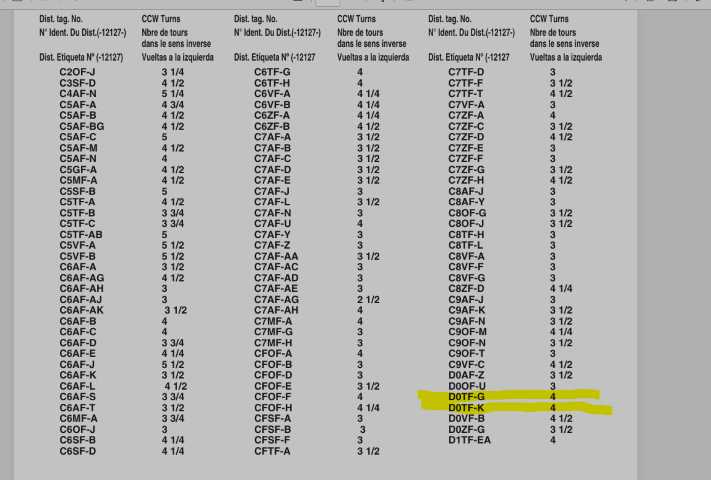
Hey there guys, ok, my 302 has the original AUTOLITE dizzy, ID tag: DOTF-12127-M I just purchased an NOS NEIHOFF dual vacuum advance from way back in the day to replace the old one (which is now gone btw), so anyhow, i’ve searched everywhere but cannot find the correct setting for this distributor ID. closest i could find was an online list that showed 2 ‘DOTF’ codes but not my ‘M’ and they are calling for initial setting> 4 CCW turns back out from stop/reset. On a 1st drive with the new one installed & set at 4 3/4 CCW turns out, im getting a bog and try to die each time off the line that wasn’t there before, likely not a coincidence. The car is not ready to run again just yet here, but im planning to also check base timing (vacuum line plugged) once its test-running again.
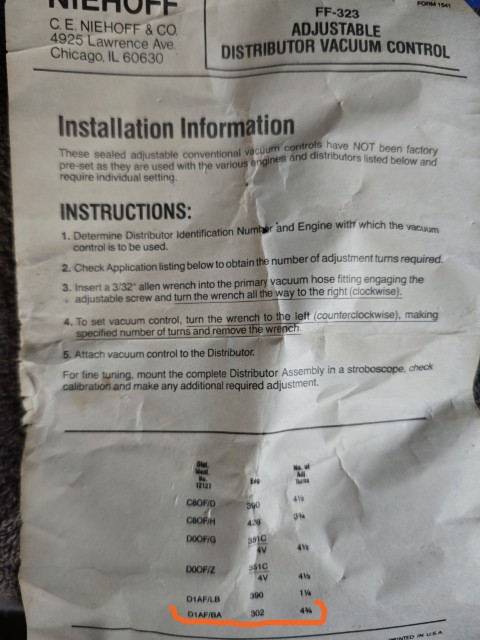
The old original paper inside the NIEHOFF box shows a 302 is 4 3/4 turns from reset to stop, but their dizzy ID is nothing like my DOTF- series. I really need to know the initial setting for the new VA because due to the A/C compressor brackets, i cannot adjust the unit without each time removing it from the motor/distributor.
To complicate things further, seeing that i have zero emissions equipment on the motor and run dual electric fans and not the original belt-driven fan setup, i was considering just eliminating the 3-port distributor vacuum switch, plugging the rear v-advance canister retard-port and running the front advance hose to full manifold vacuum. my reasoning is that the switch will not be speeding up the fan for extra cooling with my electric setup & I don’t need it to be raising the idle and soforth. as well, i need to make use of that water port for an additional sensor.
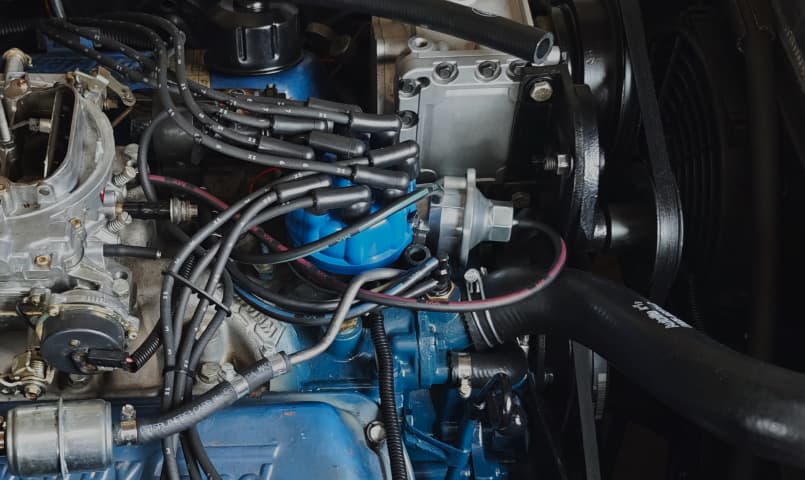
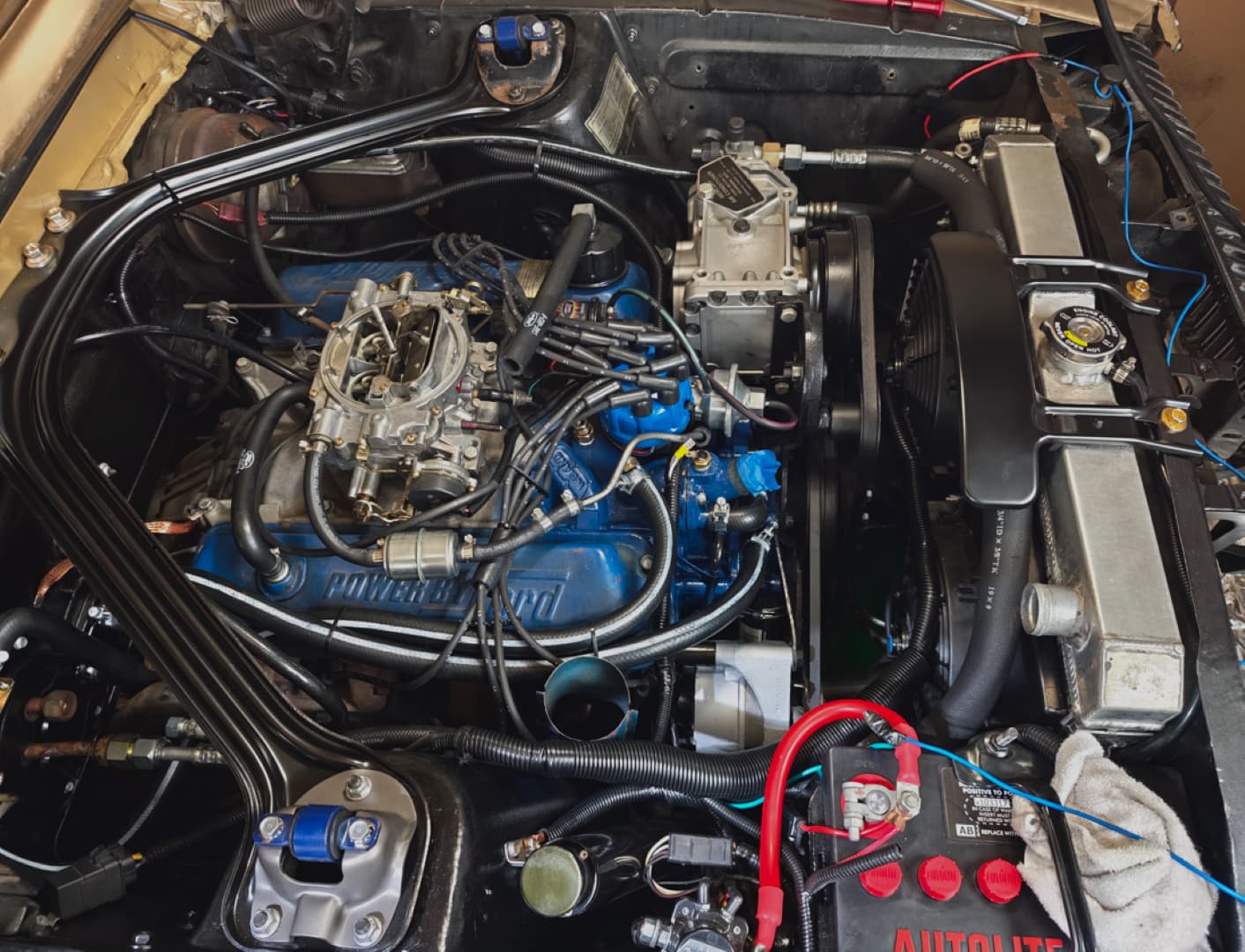
I have read thru several related threads with input from a couple guys but each situation is unique and specific so much did not apply here. also attached some related pics, 1 motor pic shows i have replaced the v-switch with a sensor, but if need be after discussion i can restore it and tee off another port for the dual sensors. so any input, thoughts on all this is much appreciated! Mark~
1 Like
It should run fine without the vacuum advance. Set you mechanical advance first.
1 Like
Thanks for checking in (is this Bill?)… to clarify do you mean ‘ok’ deleting the 3-port vacuum switch & run straight manifold vacuum to the front of the dual v-advance unit? also either way, i still must do the proper initial setting inside the canister for proper vacuum advance result, as it is not preset. if nobody knows the correct initial setting for my dizzy code, planning to try 4 turns out for the next test since i have no hard data for that setting.
Could be wrong but i think you want ported vacuum source for the vacuum advance
2 Likes
Ha, not wrong… or right. you know that (argument) ‘discussion’ goes back to the beginning of time😊 on the non-computer cars, if issues arise i generally try both and after real-world testing, really what works best for smooth & cool running, +fuel mileage,etc. on each person’s setup.
and i love the read on this retired GM/Mopar Engineer’s take on it all. especially the final thought: Ported vs. Manifold Vacuum
1 Like
Imho when using manifold vav , for driveability , the distributor is advanced at idle because of high vacuum. When you hit the throttle or let out the clutch , the vacuum goes away, the distributor retards and you get a bog. Conversely , when on ported vacuum, you distributor is retarded as far as it can and centrifugal advance takes over . Im thinking that fords dual vacuum distributor may have not been one of fords better ideas
F
2 Likes
thanks for that input. lot of stuff torn apart rn doing repairs and i also restore cosmetically in sections under the hood as i address those needed repairs/improvements work, so it’s a slow process. what i will do though is on the next start up and test run, after checking base timing… (the ported switch will be removed at that time), then i will set initial CCW 4-turns inside the new advance canister, then plug the rear line on the va-canister & run the front line to my carb’s ported side to see how everything goes from there.
Forget about all the excess paperwork. Use a timing light to determine where your timing is, then adjust to something that works like 10-12 initial, mechanical is 34-36 at about 3000…THEN adjust vacuum which will could be anywhere from about 8 to 16 degrees…depending on how the vehicle performs.
The engine doesn’t need vacuum advance to run. Unless you are only at the drag strip or your Cougar is powering a generator with a fixed load and rpm, Or, a boat with a linear load, then vacuum advance is desirable. Drive a car with a properly set vacuum advance, unplug it and drive. The difference is noticeable.
1 Like
yes thank you. planning to do your process. but again on the va-canister it is new and not preset internally. i cannot use any form of alan wrench that reaches inside far enough to real-time adjust the can while installed & the car running due to all the A/C stuff blocking access, otherwise i’d tweak it real-time with a vacuum gauge hooked up for optimum range. i have to physically remove the unit each time to make an adjustment inside with the 3/32 alan and then reinstall to try again which yes, is a pain in the azz to keep re-doing. so the papers are related to that indicated 1st time intial setting inside the unit based on which dizzy ID# you have, and as you said yes i want it properly setup, so that spring setting inside there matters. as mentioned, i will try 4 turns out this time along with all your process.
The D0TF-M distributor is not original to the car, it’s for 70/71 F100 w/IMCO and 71 E100/E200 vans. That means your ignition curve is unlikely to be the factory '68 302 curve, which makes setting the vacuum advance to that spec a moot point.
The factory IMCO 302-2V for '68 used C8AF-F or C8OF-C, the thermactor-equipped engine used C8AF-E - none of which appear in that info sheet, so again, not relevant.
Using the “best guess” method, I would set the VA to the C7ZF-A (67 Mustang/Cougar 289-4V non-emissions) settings as a baseline.
Once you’ve accomplished that, since the engine isn’t stock anymore, you’ll want to map your actual advance curve and limits of the mechanical and vacuum advance. From there, build a proper performance curve into the distributor, since the factory curves were for emissions compliance. A 302 usually likes around 36° total timing all in by 2500~3000 rpm, plus whatever vacuum advance it will tolerate under mild load.
As far as the ported/manifold debate, the use of one or the other is personal preference or dictated by the ability to get a reasonable idle RPM. Once you’re off idle, they function the same. The cars with the dual area vacuum canister idled at or below 0° timing, hence the need for the thermostatic vacuum switch to raise idle rpm increasing air and coolant flow.
2 Likes
Great info, this is of a tremendous help.
Thanks for taking time to comment here with this, it’s much appreciated! Mark~
1 Like
Ported (carburetor) vacuum goes to the front side if the dual advance unit. Its purpose is to advance timing during acceleration when ported vacuum is present. Manifold vacuum goes the back side of the dual advance unit. Its purpose is to retard timing at idle for a hotter burn. It’s an emissions hack you don’t need, and your engine will run cooler without it. I run mine without any vacuum source connected to the back (retard) side.
To adjust the vacuum advance, temporarily connect the front (advance) side to manifold vacuum at idle and look at how much timing advances with your timing light. The shop manual spec uses camshaft degrees, so double the numbers for crankshaft degrees on your timing light. For my 351C, the spec is 8-10 1/2 (16-21 crankshaft degrees) at 20” vacuum. Thats enough to make a big difference in snappy acceleration.
1 Like
And thanks for the detailed info on my distributor. up until couple yrs ago, the car had sat for like a decade and has less than 40K miles on it. and this distributor is obviously very old, I find it interesting that it was changed out at all so long ago let alone different from factory original to this early '70s Autolite truck unit, and wish i could know when/why they did it. But it seems to operate well enough with the PerTronix unit so i will continue to use it and work to dial everything in for cooler and smooth running.
Yeah, as Hemikiller noted, that’s not an original advance unit, If it were me, I would just dump it and get the correct single diaphragm vacuum advance unit designed to work on your engine.
2 Likes
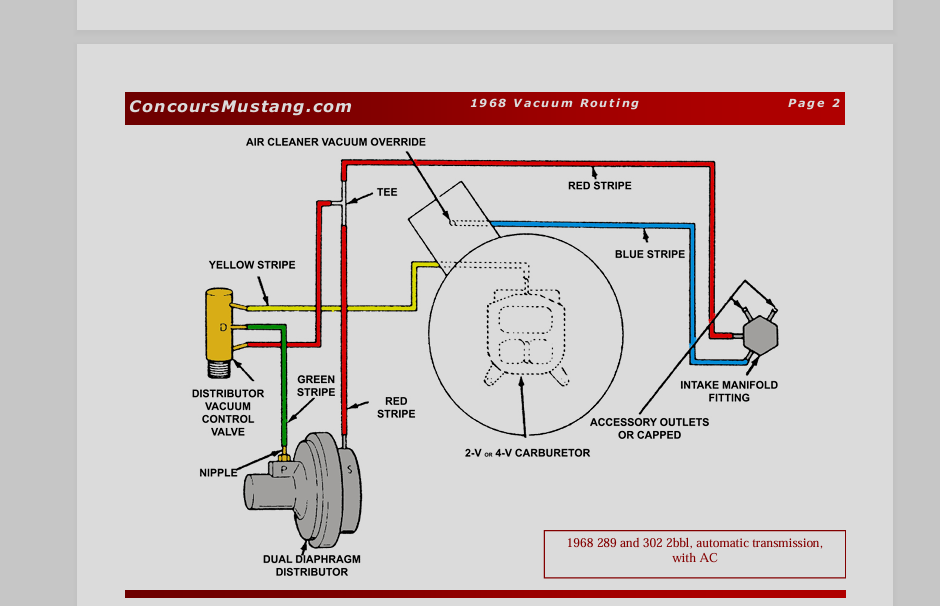
well since it’s new and i just dropped $50 bucks on it, can’t i just block off the rear port, adjust the inside spring per his setting and run my vacuum line to the front? its then fundamentally the same no? if not, i’d buy a single then. also what’s odd is that my factory A/C car did have the dual unit because it was identical to this new one, all connected to the original 3-line ported vacuum switch (which i just recent removed to eliminate & to use the water port) and it was evident in looks & condition that it had all been there since the year one.
edit: as seen here, this was the exact setup on the car (302, 2V, A/C, AT) prior, including the vacuum switch and dual v-advance
Yeah, I didn’t even realize they used the dual advance in 68. So if it works, you might as well use it. Just need to tweak it to match centrifugal and vacuum advance curves for your engine. And then if it were me, I would just not use the tee and leave the retard (back) side port plugged.
1 Like
Considering that this distributor is of a different model year & truck series, along with its age and who knows who did what to it over time… it will be worthwhile to send it out to Dan Nolan to go over & get everything dialed in so she’s running well & proper.
The stock specs really only apply to a stock configuration. You become the engineer when you make modifications. Those electric fans will place a lot more load on the engine at idle than the stock fan. That alternator looks new so I am making the assumption that you went with the appropriate higher output alternator. You may need to step up idle RPM to keep the fans running at full potential.
I know you just bought the vacuum advance module but you would probably have an easier time of it with a single advance unit. The factory procedure for setting timing with that dual diaphragm unit is pretty complicated. The single is also more compact. Typically I see the distributor clocked away from the AC bracket but the gear on the distributor you have may not allow that.
Nothing wrong with experimenting with manifold vacuum at idle. Typically by the time you close the throttle enough to pull the idle RPM down the car develops a bog or flat spot off idle when the timing retards but depending on cam and many other variables you results may vary. A lot of guys set Chevy timing to 30 degrees mechanical advance at 2500 rpm and then count of manifold vacuum to provide enough advance for idle. Retarded timing can make the engine easier to start. This is a fun hobby. Try some stuff.
2 Likes
Good stuff for sure, appreciate you taking time to reply.
edit: On the single can i ordered SMP VC31 off AMZN. thanks again!
2 Likes
I’m NO expert. But doesn’t all come down to, is what the car needs in THAT situation. Factory specs are for factory applications. When you modify it, everything changes.